• Home
  • Nepal
  • Other Destinations
  • Blog
  • Company
Chat on Whatsapp

High-altitude treks, real local guides, and straight-up advice from the Himalayas.

TripAdvisor
Lonely Planet

Stay Ahead of the Mountains

Get trek updates, permit alerts, and seasonal tips straight from the Himalayas.

Contacts

Kaldhara-16, Kathmandu, Nepal

Tel: +977 1 5360765

WhatsApp: +977 9841353904

Email: [email protected]

Quick Links

  • Legal Documents
  • Terms & Conditions
  • About Us
  • Favourites
  • Blog

Activities

  • Trekking
  • Tours
  • Jungle Safari
  • Day Hiking
  • Helicopter Tours
  • Jeep Tours

Payment Methods

Payment Method
Payment Method
Payment Method

Recognized By

Association Logo
Association Logo
Association Logo
Association Logo
KEEP

© 2026 Alpine Adventure Club. All Rights Reserved

Built by Bishal

Essential Trip Information

  • Location

    Nepal
  • Region

    Mustang

Duration

20 days
  • Group Size

    Min. 2 Pax
  • Max Elevation

    4,320
  • Difficulty

    Moderate
  • Accommodation

    Hotel/Guesthouse
  • Best Seasons

    Spring and Autumn
  • Start Point

    Kathmandu
  • End Point

    Kathmandu
  • Permit

    Specail permit Required
  • Food

    Three Meals/Day
  • Overview of the trek

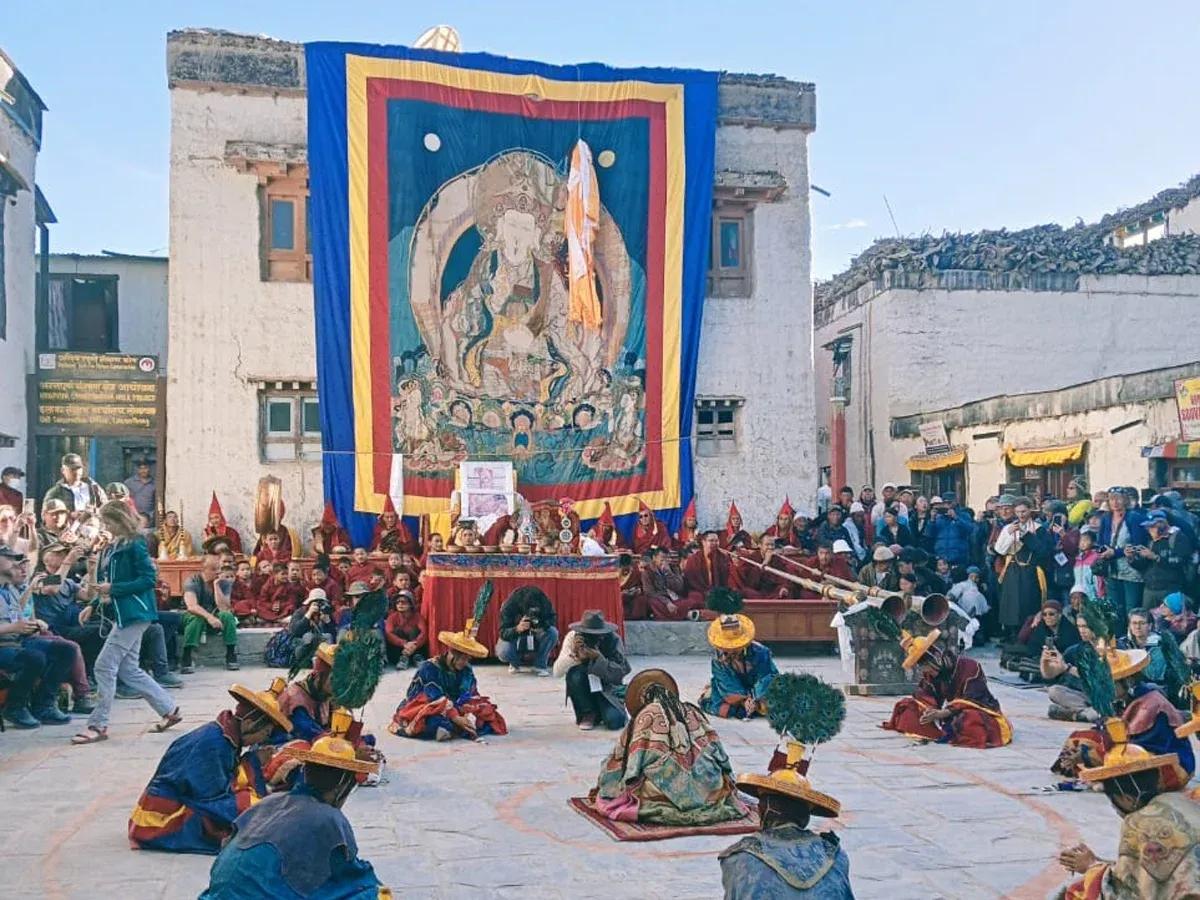
    Many people just visit in Nepal for Tiji (Tenchi) festival, which is a three –day ritual celebrated in the parched land of upper Mustang (Lo Manthang). Mustang Tiji festival is well known as “The chasing of the demons” clusters on the Tiji myth. Tiji tells the story of a deity named Dorje Jono who must battle against his demon father to save the Kingdom of Mustang from destruction.

    The demon father wreaks havoc on Mustang by creating a water shortage which, in this extremely arid land, is the most precious life-sustaining resource. Dorje Jono eventually defeats the demon and banishes him from the land. Tiji festival is celebrated to invoke the mighty Dorje Jono to remove any obstacle out of the way.

    Tiji is a kind of festival that exist the words ‘ten che’ represent “the hope of Buddha dharma” presenting in the world and, as every other festival, celebrates the success victory of god over evil. Mustang is very popular destination for trekking and Jeep drive tour, so our company offers Mustang Tiji festival trekking and Tiji festival jeep drive tour. Tiji festival is a colorful tenchi festival.

    The Tenchi Festival takes place annually in Lo Manthang, the capital of Upper Mustang and the former Tibetan Kingdom of Lo. Each spring, monks perform ceremonies, rites, and dances during the festival to dispel evils and demons from the former kingdom. Upper Mustang Tiji Festival has been announced to be held on the 14th, 15th, and 16th of May 2026.

    Highlights of the Mustang Tiji Festival Trek

    • The main event is a three-day Buddhist festival in which the legend of Dorje Jono, who defeated a demon to save the kingdom, is re-enacted.
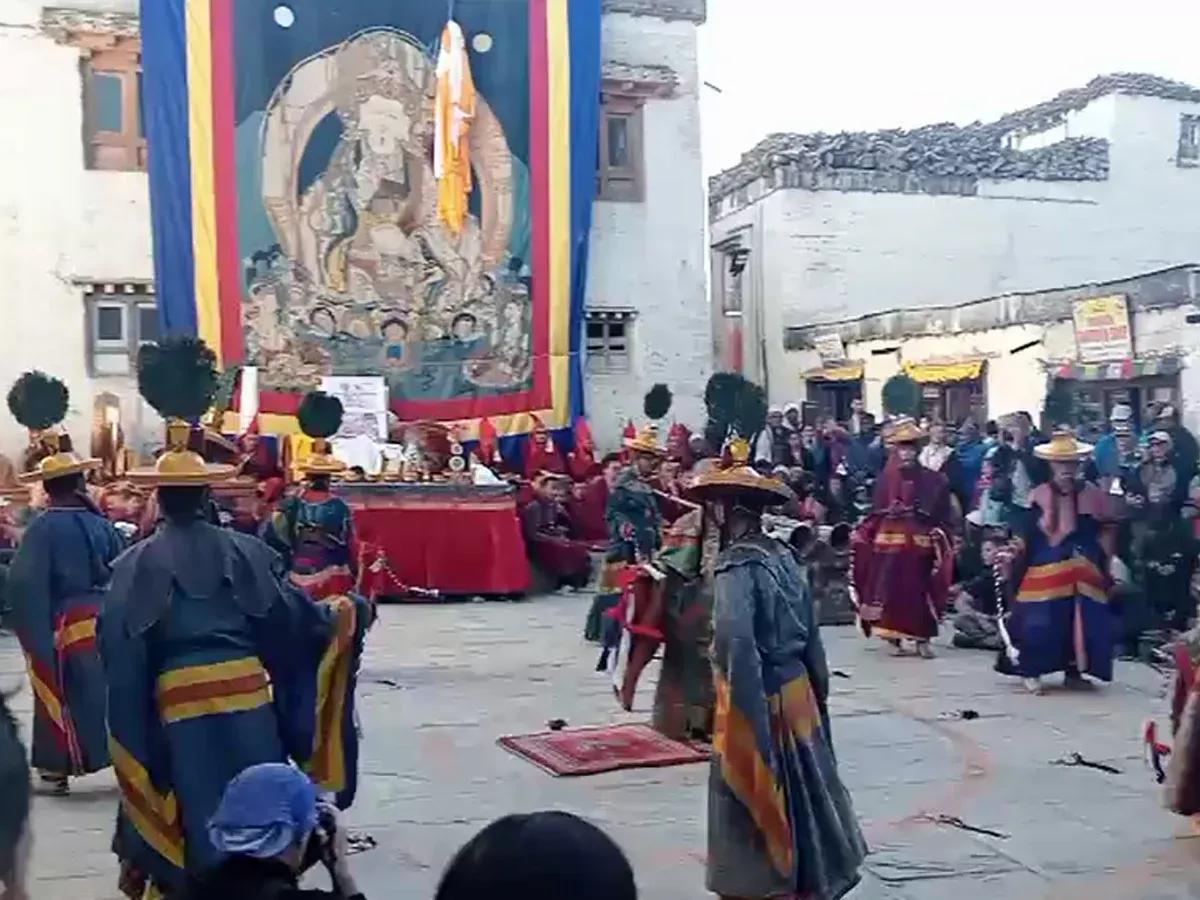
    • Traditional masked dances performed by monks in the royal courtyard.
    • Spiritual atmosphere rare insight into the rituals of Tibetan Buddhism that have been preserved for centuries.
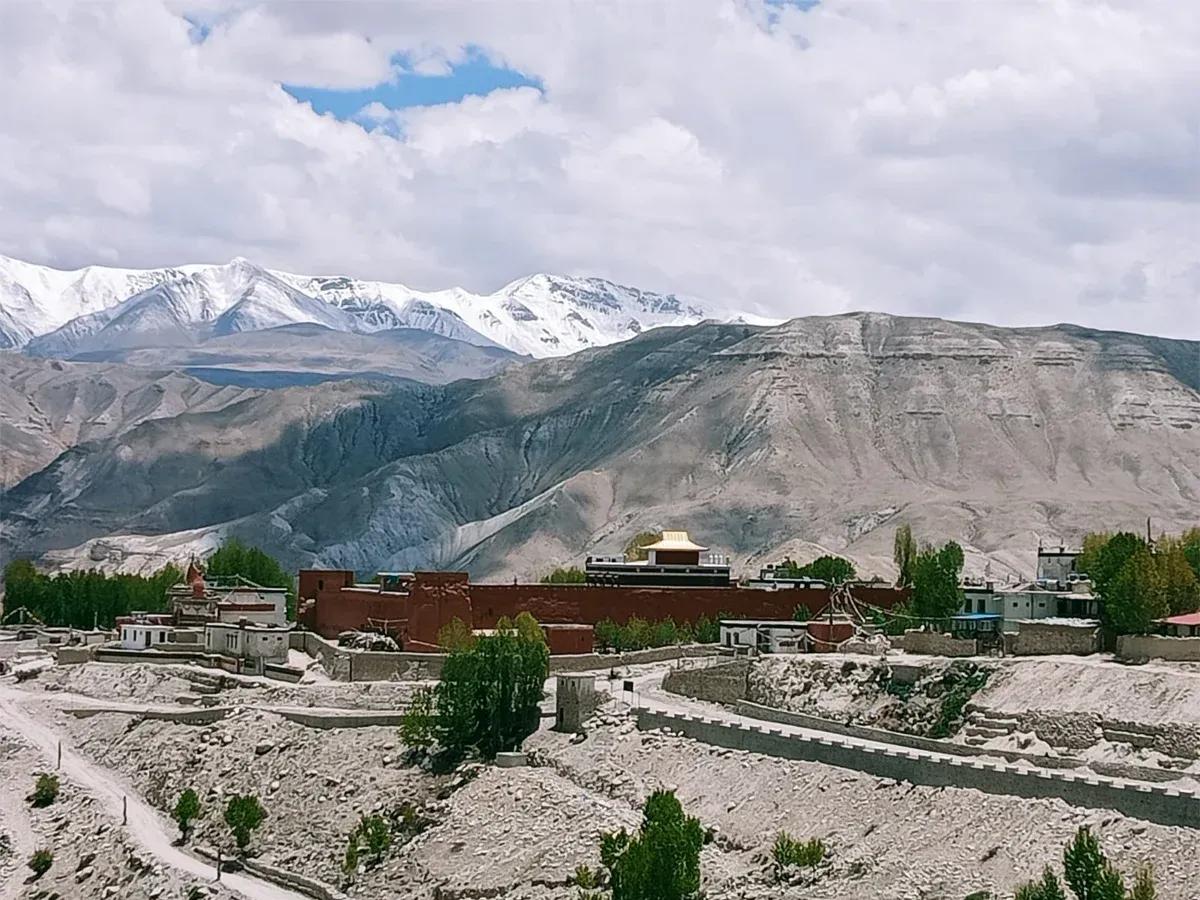
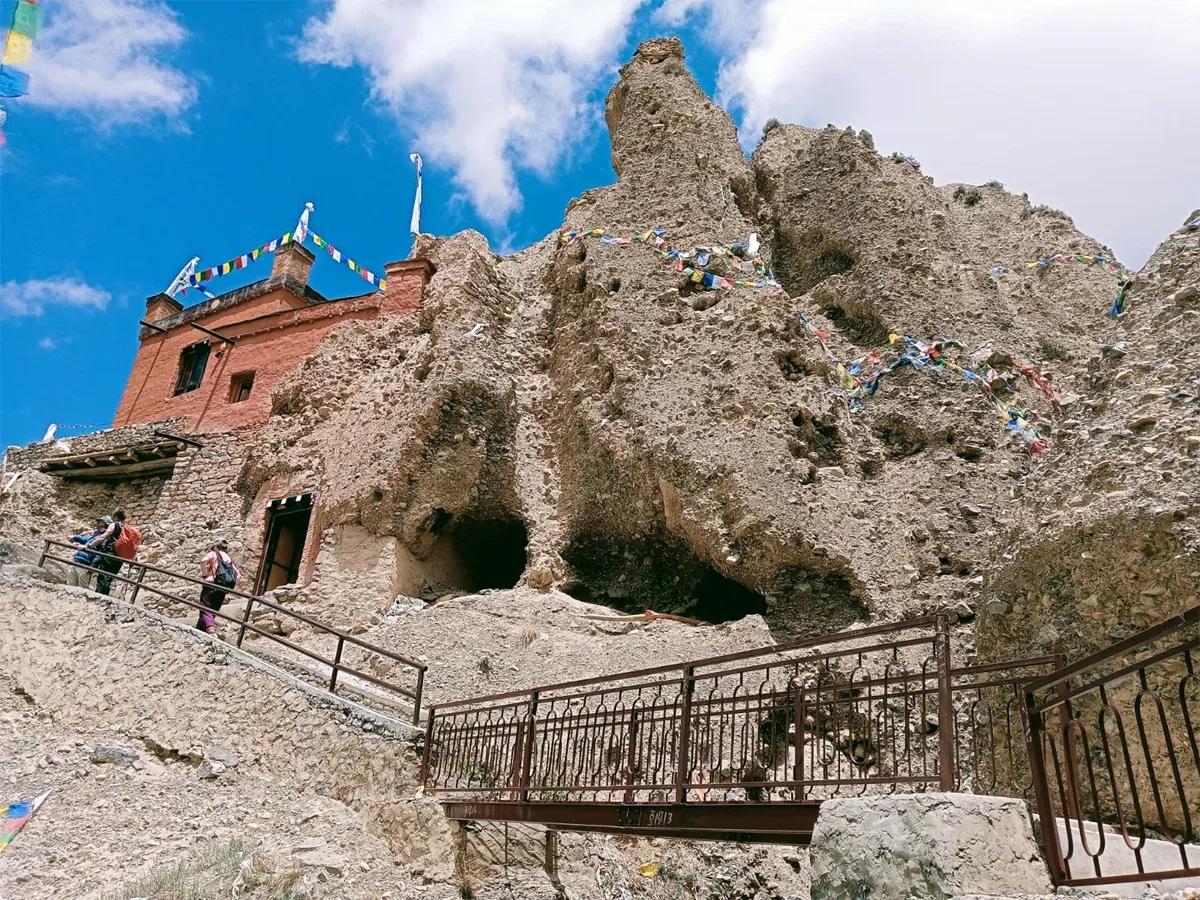
    • Dramatic desert-like terrain, red cliffs, and ancient caves.
    • Spectacular views of Nilgiri, Annapurna, and Dhaulagiri ranges.
    • Trekking through wind-swept canyons, high passes, and remote villages.
    • Interact with the Lopa people, with deep Tibetan roots.
    • Ancient capital of the former Kingdom of Lo.
    • Explore medieval monasteries, royal palace, and narrow alleys.
    • Visit centuries-old monasteries like Thubchen, Jampa, and Chode.
    • Witness yak herding, traditional farming, and untouched ways of life.

    Trip Itinerary for Mustang Tiji Festival Trek

    Detailed Day-to-Day Itinerary

    Day 01

    Arrive Kathmandu

    After you arrive in Kathmandu airport please check our company board outside the main gate there will be our airport representative you will meet with him, and he will be transferred to hotel by private vehicle and our representative will help you to check in your hotel after that if time enough, representative will take you to our office for short briefing about the trip but if not enough time then give a short trip brief in hotel and request to pay the due balance for the trip. Overnight at Hotel.

    Day 02

    Kathmandu Sightseeing and trek Preparation

    After breakfast, Kathmandu visits Durbar Square, Pashupatinath Temple, Swayambhunath Stupa, and Boudhanath Stupa which are all World Heritage Sites. Durbar Square throws light on the life of the royals in ancient times. Pashupatinath Temple is one of the most important pilgrimage places for all Hindus. Swayambhunath is also known as Monkey Temple and Boudhanath Stupa is one of the largest stupas in the world. Late in the afternoon, we introduced you to your mountain/trek guide. overnight at Hotel.

    Day 03

    Kathmandu drive by tourist bus to Pokhara (820 m)

    Trekking staff will arrive at your hotel at 6:30 am to pick you up to tourist bus station for journey to Pokhara. Normally bus leave at 7:00 am from Kantipath and it takes about 7 hours from Kathmandu. Today, you can take a breakfast in your hotel that you order earlier night or request to manage packing breakfast that you eat in bus journey because on the way we are not stopping for breakfast as well not available good breakfast, but we stop for a lunch so try to eat Nepalese food (Dal Bhat). Afternoon you arrive in Pokhara then check in your hotel and refresh and look around lakeside. Pokhara is a beautiful valley, with panoramic views of Annapurna, Machapuchare (shape of fishtail) in the north, Dhaulagiri in the west, Lamjung Himal and Manaslu in the east. The town of Pokhara is set on the banks of the Phewa Lake. It is smaller and much less hectic than Kathmandu, providing the perfect starting point for our trek. Overnight at hotel.

    Day 04

    Pokhara flight to Jomsom (2,713 m) and trek to Kagbeni (2,800 m)

    Early morning transfer to Pokhara airport, fly to Jomsom. This is one of the world's exciting flights to see mountain closely through the tiny aircraft, Annapurna I 8091 meters, Dhaulagiri 8167 meters, fishtail 6997 meters and other numerous peaks. You begin your trek to Kagbeni following along the bank of Kali Gandaki River. En- route, you pass through arid part of Kali Gandaki River with beautiful Ekle Bhatti. Kagbeni people are influence with more Tibetan and also Kagbeni is gateway for Upper Mustang and Damodar Kunda trekking. After reaching at Kagbeni (2800m) there is the oldest monastery so better to visit this monastery and look around Kagbeni village. Overnight at Lodge/Guesthouse.

    Day 05

    Kagbeni trek to Chele (3,060 m)

    Today trek trail starts with a special permit check up and onwards to the riverbank of Kaligandaki up stream. During the trek we have scenic picturesque place to stop through the sandy and windy trails. This trails follows the up and downhill. Firstly we reach Tangbe village (3060m) with narrow alleys amongst white washed houses, fields of buckwheat, barley, wheat and apple orchards. From there we trek forward to Chhusang (2980m) and after crossing the river head up to the huge red chunk of conglomerate that has fallen from the cliff above, forming a tunnel through which the Kaligandaki follows. We head up to small ridges reach at Chele village (3050m) overnight at Lodge/Guesthouse.

    Day 06

    Chele trek to Ghiling (3,570 m)

    The day starts with walking upward to Chele La (3, 630m) pass. After crossing the ridge from Chele the trail enters a large side valley and makes a long gradual descent to Samar, the major stopping place for horse caravans with many horse stables. From Samar, you will have panoramic views of Mt. Nil Giri and Annapurna range. Then the trail goes slope down to Jhuwa Khola and the gradual upward to Bhena La (3,830 m). From here you move downwards to Syangmochen. Then you further climb to Shyangmochen La (3850m) where the route enters another huge valley. After that, the trail descends passing through a large painted chorten and arrives at the picturesque village Ghiling. Overnight at Lodge/Guesthouse.

    Day 07

    Ghiling trek to Tsarang (3,560 m)

    Today the trail turns westward and climbs gently through the fields passing below Tama Gaon. Then it turns north and arrives at Nyi La (4020m/ 13189ft) pass. Then it drops steeply to Ghemi, a large village surrounded by extensive fields. In Ghemi there are gompa, nunnery and a couple of guesthouses. After that, the trail descends to the river and goes step up for around an hour alongside the longest mani wall in Nepal and the following the easy wide road you get to Tsarang village. In this village, you may visit old gompa and experience Buddhist culture. Overnight at Lodge/Guesthouse.

    Day 08

    Tsarang trek to Lo-Manthang (3,810)

    Today you trek to Lo Manthang. The trail first descends about 125 m then it crosses Tsarang Chu and follows the steep rocky trail and enters the Tholung valley. After that, the trail turns north and climbs gently to a largely isolated chorten, then crosses a stream and reaches the Lola (3,950 m) where you will see the view of the walled city of Lo Manthang. Descending for some time the trail crosses a stream and climbs up to Lo Manthang. Overnight at Lodge/Guesthouse.

    Day 09

    Tsarang trek to Lo-Manthang (3,810 m)

    Today, trek trail to Lo-Manthang with a magnificent view of Nilgiri, Tilicho, Annapurna and Bhrikuti peak. The trail first descends to Charang Khola and then climbs steeply after crossing the river (Khola). Further the trail ascends gently to the 3,950m windy pass of Lo, from where you can see the Lo-Manthang Valley. While descending to Lo-Manthang (3810m), views of the walled city appear magnificent with its hills on the Tibetan Border. Finally you reach at Lo-manthang then visit Royal Palace, Monasteries and town. Overnight at Lodge/Guesthouse.

    Day 10

    First day bserve Tiji Festival Lo-Manthang

    Today is the first day of the Tiji Festival. There is going to be a huge celebration in Lo-Manthang. The festival starts with unrolling a three-storied Thanka painted with images of Padma Sambhava or Guru Rimpoche. You spend the day by observing the local dances and celebrations. The people are going to be there in their traditional dresses. You will see the women in traditional jewelry, Buddhist monks in robes and experience a completely different cultural atmosphere. A masked dance starts showcasing the mythical stories of Tiji festival. As the dance ends, Dorje Jono, an incarnation of Lord Buddha, kills the demon and relives the plague and brings harmony to the region. Overnight at lodge in Lo-Manthang.

    Day 11

    Second day observe Tiji Festival Lo-Manthang

    On the second day of the festival, you enjoy the dances of the Tibetan Lamas. The purpose of this dance is to chase away the hunger and evil spirits in the region. A combination of costumes, masks, 12-foot horns, butter cakes, yaks, pigeons, dogs, and several other native aspects makes this festival a treat to watch. Overnight at lodge in Lo-Manthang.

    Day 12

    Final observe Tiji Festival Lo-Manthang

    Today is the final day of the Tiji festival. You walk to Namgyal Gompa; a monastery on the top of the hill. It is an important place as it also serves as the court for the local community. In the evening, you return back to the village for the festival. The evil remains of the demons are destroyed on the final day. The demons are set out on the old tiger skin and are attacked by bow and arrows, old guns, and catapult. Overnight at lodge in Lo-Manthang.

    Day 13

    Lo-Manthang trek to Drakmar (3,820 m)

    Today you trek back from Lo Manthang. The trail climbs steadily, offering a last glimpse of Lo Manthang. It continues climbing to the Chogo La (4,325m), the highest point on the trek. Then the trail makes a short, steep descent and crosses the Chharang River, then climbs to Lo Geker and reaches to Ghar gompa a small monastery. Climbing to the ridge, crossing a valley along some alpine meadows, and then dropping down a steep eroded path, you will reach Drakmar. Overnight at Lodge/Guesthouse.

    Day 14

    Dhakmar trek to Shyangbochen (3,800 m)

    The trail descends alongside stream, passing the stone walls and fields of Drakmar village. Then it climbs to a ridge and descends to the lower part of Ghemi and further descending you will reach to the place namely Jaite and descend again gently to Chhung-Kah. The trail then reaches to Tama Gaon (3,710 m) and continues descending to Shyangbochen. Overnight at a mountain lodge.

    Day 15

    Shyangbochen trek to Chhuksang (2,980 m).

    Departing Shyangbochen, the trail retraces your earlier path, offering a new perspective on the familiar terrain. You’ll pass through Yamdo and Bhena, winding through highland fields and quiet hillsides, before reaching the charming village of Samar once again. From Samar, the trail descends steadily through Chele, leading you back toward the Kali Gandaki River. The dramatic canyon walls and windy riverbeds mark your return to lower altitudes, and eventually you arrive at Chhuksang, a lively village nestled near the river’s edge. Overnight at Lodge/Guesthouse.

    Day 16

    Chhuksang trek to Jomsom (2,713 m)

    Your final day on the trail begins with a sense of quiet reflection as you leave Chhuksang, descending along the familiar path beside the Kali Gandaki River. The trail winds through arid cliffs and wide riverbeds, gradually transitioning from the mystical landscapes of Upper Mustang to the more bustling lower valley. As you approach Tangbe and Kagbeni, you may feel the contrast between the remote stillness of Mustang and the livelier settlements closer to Jomsom. The final stretch is relatively gentle, following the riverbed and wide open plains that lead you into Jomsom, the administrative hub of the Mustang region. Overnight at Hotel/Guesthouse.

    Day 17

    Jomsom Flight to Pokhara (850 m)

    Today, you will take the early morning flight which again will give close-up views of the Annapurna range, Dhaulagiri, Nilgiri and Annapurna range and you are flying about 25 minutes flight in a small aircraft. After arrival in Pokhara airport drive to hotel check-in your hotel and relax or do your own activities in Pokhara or look around lakeside. Overnight at hotel.

    Day 18

    Pokhara drive tourist bus to Kathmandu (1,350 m)

    It takes about seven hours, while driving from Pokhara to Kathmandu, you head up to Damauli,, Dumre, Muglin and Kurintar where the Nepal's first Cable car is operated to reach to Manakamana Temple. En route, you could enjoy the mountain views, green sceneries, rice terrace fields, vegetable fields and people being engaged in their daily life activities. From Naubishe you climb up to Thankot, the gateway to the capital city. You can also fly from Pokhara to Kathmandu, which takes about 25 minutes, but you will have to pay the airfare. Overnight Hotel.

    Day 19

    Leisure day in Kathmandu

    Today, you have leisure day for relax or shopping in Kathmandu, so you can do your own activities by yourself or consult with company to arrange extra activities. Overnight at hotel.

    Day 20

    Depart Kathmandu

    After breakfast, End of our services with departure transfer to the Kathmandu airport to board flight for your onward destination.
    Personalize Your Experience

    Have your own ideas or special requirements? We're more than happy to tailor the itinerary to match your schedule, interests, and travel preferences. Let us help you create a personalized adventure that's truly yours.

    Customize My Trip

    Pricing Details

    Price Includes

    • Airport pick up and airport drop by private transportation
    • Twin sharing accommodation in Kathmandu with breakfast
    • Historical monuments cities sightseeing with tour guide
    • Sightseeing transportation by Non A/C comfortable vehicle
    • Sightseeing entrance fees for historical cities sightseeing
    • Kathmandu to Pokhara and return overland transportation by tourist bus
    • Twin sharing accommodation in normal Trekkers lodge / Teahouse
    • Three time meal during the trekking (Breakfast, Lunch, and Dinner a day)
    • Dessert (Fresh Fruits/Chocolate) after dinner on behalf of the company
    • Government license holder, English-speaking trek guide /leader for the team
    • One porter who will carry your luggage during the trek (Two guest get one porter)
    • Annapurna Conservation area project entry fee
    • Upper Mustang special permit
    • Pokhara to Jomsom and return flight tickets and airport taxes for guide and clients
    • Porters expenses to take them from Kathmandu to Jomsom and return by bus
    • Insurance for Nepalese staff (Trek guide and Porters)
    • Twin sharing Accommodation in Pokhara with breakfast
    • Nepal Government taxes and office service charge

    Price Excludes

    • Lunch and Dinner during the stay in Kathmandu
    • Extra night accommodation in Kathmandu because of early arrival, late departure, early return from mountain (due to any reason) than the scheduled itinerary
    • International and domestic air tickets and airport taxes except Jomsom Sector
    Important Note

    The pricing is based on our standard plan suited for most customers. We also provide tailored solutions including both Budget and Premium Plans. Feel free to reach out to us directly.

    Gear Up for Your Trek

    Here’s a concise guide of essentials to prepare smartly for your trek.

    • Thermal underwear (top & bottom)
    • Moisture-wicking T-shirts (2–3)
    • Thermal or wool socks (4–5 pairs)
    • Underwear (quick-dry)
    • Fleece jacket or pullover
    • Lightweight wool sweater
    • Insulated jacket (-10°C to -20°C)
    • Waterproof shell jacket with hood
    • Waterproof trousers
    • Lightweight hiking pants (2 pairs)
    • Windproof softshell (optional)
    • Warm hat, sun hat, buff or neck gaiter
    • Gloves (liner + insulated)
    • Sleepwear and casual evening clothes
    • Waterproof trekking boots (broken-in)
    • Camp shoes or sandals
    • Wool trekking socks (3–4 pairs)
    • Sock liners (optional)
    • Duffle bag (60–80L for porter)
    • Daypack (25–35L with rain cover)
    • Backpack rain cover
    • Garbage bags / bag liners
    • Packing cubes or dry bags (optional)
    • Sleeping bag (-10°C to -20°C rated)
    • Sleeping bag liner
    • Trekking poles
    • Headlamp (extra batteries)
    • Water bottles (2 x 1L Nalgene)
    • Water purification tablets or filter
    • Sunglasses with UV protection
    • Dry snacks (energy bars, trail mix)
    • Pocket knife (optional)
    • Altitude sickness meds (Diamox)
    • Blister treatment (moleskin, Compeed)
    • Biodegradable soap & shampoo
    • Toothbrush & toothpaste
    • Quick-dry towel
    • Wet wipes & hand sanitizer
    • Toilet paper
    • Lip balm (SPF) & sunscreen (SPF 30+)
    • Nail clippers, tweezers
    • Razor (optional)
    • Personal first aid kit
    • Prescription medications
    • Electrolyte powder
    • Basic cold/flu medicine
    • Power bank
    • Charging cables
    • Travel adapter (Nepal types C, D, M)
    • Phone / camera
    • Offline maps or trekking guide app
    • Notebook, pen
    • Copies of passport & permits
    • Extra passport photos
    • Cash (Nepali rupees)
    • Passport (original)
    • Travel insurance with high-altitude coverage
    • TIMS card
    • Sagarmatha National Park permit
    • Lukla flight tickets (round trip)
    Important Note

    Sleeping bags and down jackets are available for rent in Kathmandu, while other trekking gear can be easily purchased. At Alpine Adventure Club, we’ll make sure all your essentials are ready so you’re fully prepared for your adventure.

    Frequently Asked Questions

    Overview & Essentials

    Typically, packages include accommodation, meals during the trek, guide and porter services, permits, and ground transportation. Flight costs, insurance, and personal expenses are usually excluded.
    While prior trekking experience helps, most treks are designed to be achievable with average fitness. Some high-altitude treks may require conditioning or preparation beforehand.
    There is no strict age limit, but participants should be reasonably fit. Trekkers above 60 or with health conditions should consult a doctor before the trip.

    Arrival & Visas

    Most travelers require a tourist visa, which can often be obtained on arrival or online. Check your country’s embassy website for up-to-date visa policies.
    Airport pickup is often included in the tour package. If not, taxis or pre-arranged transport options are available and reliable.
    Yes, arriving early is a great way to rest and adjust before your trek. We can help arrange additional accommodations if needed.

    Health & Safety

    Guides are trained in first aid and will assist you immediately. In serious cases, evacuation (often by helicopter) can be arranged. Travel insurance with emergency coverage is strongly recommended.
    Yes, especially above 2,500 meters. Our itineraries are designed with gradual acclimatization and rest days to help prevent it. Drinking water, eating well, and resting are key.
    Yes, all certified guides are trained in altitude awareness, first aid, and emergency protocols to ensure your safety throughout the trek.

    Weather & Temperature

    Spring (March–May) and autumn (September–November) are the most popular trekking seasons with stable weather and clear skies.
    Temperatures can drop significantly at night, especially at higher altitudes. Days are usually moderate, but proper layering is important.
    Yes, extreme weather can cause delays, especially for flights or high passes. We always try to adjust plans safely and flexibly.

    Accommodation & Facilities

    Accommodations are usually in local lodges or tea houses with basic amenities—clean beds, shared bathrooms, and dining halls.
    Some lodges offer hot showers for an additional fee, but availability may be limited at higher altitudes.
    Charging is available in most lodges for a fee. Power supply may be limited or solar-based, so bring a power bank as backup.

    Packing & Gear

    You’ll need layered clothing, good trekking boots, a daypack, a sleeping bag (if not provided), and basic toiletries. A detailed packing list will be shared upon booking.
    Yes, you can rent most essential gear like down jackets, sleeping bags, and poles from local shops at affordable rates.
    Keep your daypack light with only essentials (water, snacks, jacket). The porter will carry your main bag, usually limited to 10–15 kg.

    Trekker Reviews

    Nathan Reynolds (Australia)

    Nathan Reynolds (Australia)

    Verified

    "I highly recommend Alpine Adventure Club Treks & Expedition. Binod Thapa and his staff are friendly and professional, ensuring complete satisfaction. The guide and porter were knowledgeable and organized the best accommodations, making the trek comfortable and enjoyable. All my questions were promptly answered, easing any concerns about booking online. Prices were better than if I arranged it myself. Overall, a hassle-free, great experience in Nepal thanks to their excellent organization."

    USD $2885/ person
    ℹ️ Limited seats available for selected departures
    Book NowSend an InquiryCustomize Your Adventure
    USD $2885 / pp
    Book Now
    Nepal entry visa fee
  • Personal trek equipment and Clothing
  • Wire Transfer charge or Credit card service charge as company rule
  • Alcoholic beverages, laundry, Telephone calls and all types of hot drinks during trek
  • Temple, monasteries or any entry fees during the visit in upper Mustang
  • Soft drinks such as cola, mineral water etc
  • Personal nature expenses and Tipping (Tips)
  • Hot water, hot shower and Camera battery charge cost (if need to pay)
  • High risk medical / travel insurance and First aid kit
  • Emergency rescue evacuation (if needed)
  • Expenses occurred as a result of delay beyond our control in case of weather, flight cancellation or natural calamities.
  • Any other things not mentioned
  • Similar Treks You Might Like