• Home
  • Nepal
  • Other Destinations
  • Blog
  • Company
Chat on Whatsapp

High-altitude treks, real local guides, and straight-up advice from the Himalayas.

TripAdvisor
Lonely Planet

Stay Ahead of the Mountains

Get trek updates, permit alerts, and seasonal tips straight from the Himalayas.

Contacts

Kaldhara-16, Kathmandu, Nepal

Tel: +977 1 5360765

WhatsApp: +977 9841353904

Email: [email protected]

Quick Links

  • Legal Documents
  • Terms & Conditions
  • About Us
  • Favourites
  • Blog

Activities

  • Trekking
  • Tours
  • Jungle Safari
  • Day Hiking
  • Helicopter Tours
  • Jeep Tours

Payment Methods

Payment Method
Payment Method
Payment Method

Recognized By

Association Logo
Association Logo
Association Logo
Association Logo
KEEP

© 2026 Alpine Adventure Club. All Rights Reserved

Built by Bishal

Essential Trip Information

  • Location

    Nepal
  • Region

    Langtang

Duration

15 days
  • Group Size

    Min. 1 Pax
  • Max Elevation

    5,130 m
  • Difficulty

    Strenuous
  • Accommodation

    Hotel/Lodge/Camp
  • Best Seasons

    Spring and Autumn
  • Start Point

    Kathmandu
  • End Point

    Kathmandu
  • Permit

    Required
  • Food

    Three Meals/Day
  • Overview of the trek

    The Ganja La Pass trek is a remarkable adventure that encapsulates the essence of Nepal's natural beauty. This trek is an extraordinary combination that leads trekkers through some of the most picturesque and wild landscapes in Nepal. Starting from the charming hill town of Syabru Besi, the journey promises a breathtaking experience through lush rhododendron and conifer forests within Langtang National Park.

    The path winds upward towards stunning high alpine yak pastures, glaciers, and moraines around Kyanjin Gompa. As hikers progress, they encounter an array of vibrant flora and fauna. This brilliant route also provides trekkers the chance to cross the Ganja La Pass, should weather conditions permit. The altitude of the pass, reaching 5,130 meters, offers a breathtaking panorama of the surrounding peaks.

    Upon reaching Ngegang at 4,000 meters, the trek involves a significant ascent to the Ganja La Pass. The area surrounding the pass is often referred to as Kelaung or Kelchung, which can be accessed from a series of huts at Dukpu (4,080 meters). After conquering the challenges of the pass, the descent leads past Gekye Gompa into the tranquil Helambu Valley, creating a beautiful conclusion to the trek. The adventure culminates with a trek to either Melamchi Pul Bazaar or Talamarang, where trekkers can catch a bus back to Kathmandu.

    Highlights of the Ganja La Pass Trek

    • Panoramic views of peaks like Langtang Lirung, Langshisa Ri, and Ganesh Himal.
    • A sacred Tibetan Buddhist monastery and yak cheese factory, providing cultural insights and stunning mountain views.
    • Opportunity to spot red pandas, Himalayan tahr, and diverse alpine flora.
    • A popular acclimatization hike offering sweeping vistas of the Langtang range.
    • A tranquil area inhabited by the Hyolmo people, known for its terraced fields, apple orchards, and Buddhist monasteries.
    • Spend three nights camping in high mountain areas, sleep in a tented camp and eat self-cooked food

    Trip Itinerary for Ganja La Pass Trek

    Detailed Day-to-Day Itinerary

    Day 01

    Arrive Kathmandu

    Duration:
    ~30 minutes
    Accommodation:
    Hotel
    After you arrive in Kathmandu airport please check our company board outside the main gate there will be our airport representative you will meet with him and he will transferred to hotel by private vehicle and our representative will help you to check-in your hotel after that if time enough, representative will take you to our office for short briefing about the trip but if not enough time then give a short trip brief in hotel and request to pay the due balance for the trip. Overnight at Hotel.

    Day 02

    Kathmandu Sightseeing and trek preparation

    Duration:
    ~4-5 hours
    Accommodation:
    Lodge
    After breakfast, tour guide will take to you for full day sightseeing in historical monuments sightseeing places including Pashupatinath temple (The biggest Hindu temple), Boudhanath (the biggest Buddhist stupa), Swayambhunath known as monkey temple and Kathmandu Durbar square then drive back to hotel. Overnight at hotel

    Day 03

    Drive from Kathmandu to Syabrubesi (1,503 m)

    Duration:
    ~6-8 hours
    Accommodation:
    Lodge
    Early morning, your guide will pick you up from your hotel. Transport to Syabrubesi (public bus or private vehicle) depends on your booking. The 7–8 hour drive heads north through scenic foothills, passing Trisuli Bazaar, Dhunche, and other villages. Overnight at a teahouse or lodge.

    Day 04

    Syabrubesi trek to Lama Hotel (2,400 m)

    Duration:
    ~6-7 hours
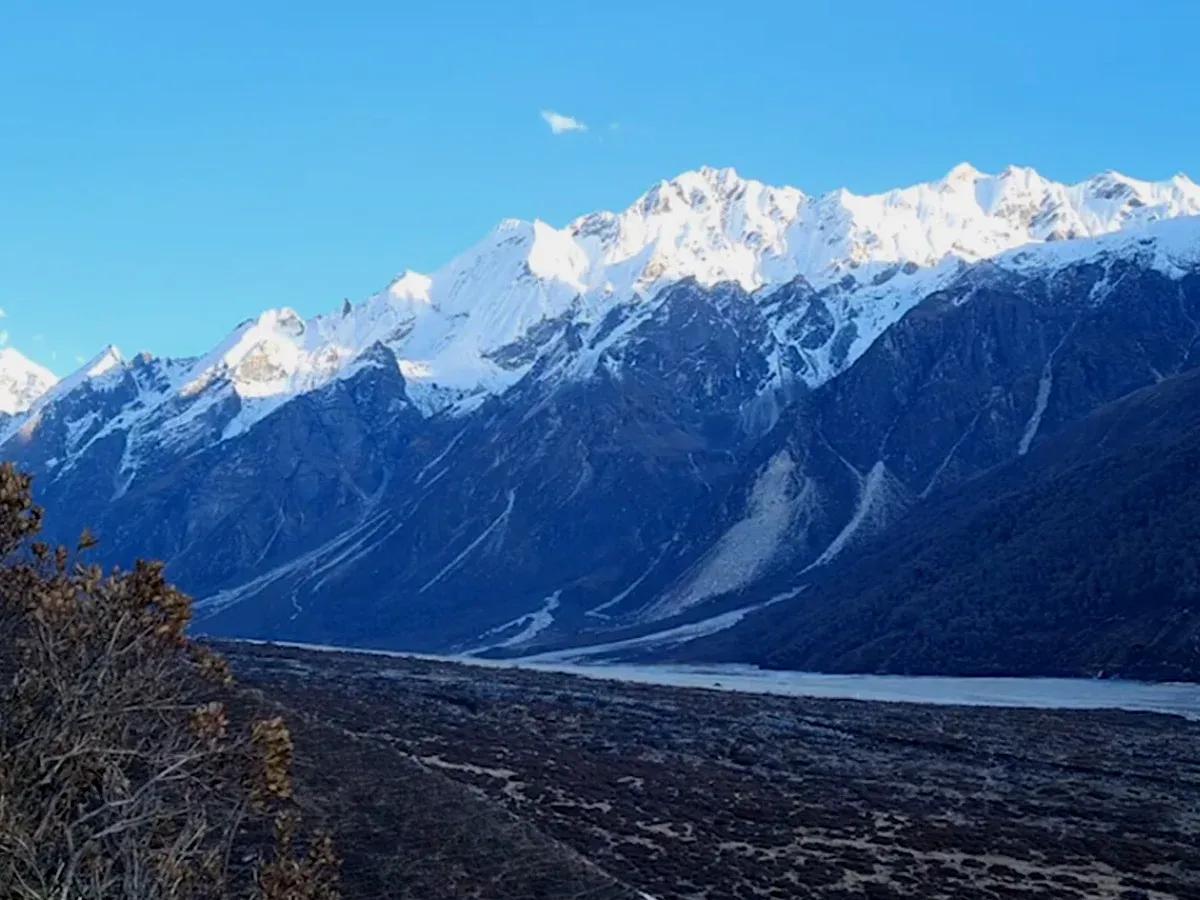
    Today the trek we cross the Bhote Kosi river by a suspension bridge towards ‘old’ Syabrubesi, a cluster of houses and a school opposite the river. Another suspension bridge carries us over the south side of the Langtang Khola, this river we will be following upwards for the next couple of days. We climb slowly to Doman (1680m) and continue over a rocky ridge to Landslide Lodge and Hot Spring restaurant; named after a small hot spring on the opposite river bank at 1810 meter. The trail now climbs gently up to Bamboo. Opposite the river we will see near vertical cliffs covered with cactuses. After Bamboo we cross the Langtang Khola on a new suspension bridge to the north bank. The forest becomes sparser and drier on this side of the river, consisting mainly of scrub nettles and oaks. We climb steeply on a good trail to Rimche (2400m) continue to Upper Rimche (2510m). Beyond the trail descend slowly to Changtang known as Lama Hotel (2470m) overnight at Teahouse/Lodge.

    Day 05

    Lama Hotel trek to Langtang village (3, 430 m)

    Duration:
    ~6-7 hours
    Accommodation:
    Lodge
    Today the trek starts with a gentle climb, but it soon becomes steeper, climbing through a forest of oaks, hemlocks, maples and rhododendron. From the trail you will see the beautiful views of Langtang Lirung (7246m). After little more then an hour we pass two lodges in the forest at Gumanchok (2800m), from where we climb to a Nepal army post and a national park checkpoint at Ghoda Tabela (2970m). The trail ascends gradually, as the valley becomes wider. We will pass a few teashops at Thangshyap (3140m). The route is now in open country, and passes many mani stones, water-driven prayer wheels and a few scattered Tamang villages before arriving in Langtang. This is a small village consisting of guesthouses and yak farms. The surrounding fields containing buckwheat, wheat, turnips, potatoes, and barley have typical stone fencing walls. Overnight at Teahouse/Lodge.

    Day 06

    Langtang village trek to Kyangjin Gompa (3,870 m)

    Duration:
    ~3-4 hours
    Accommodation:
    Lodge
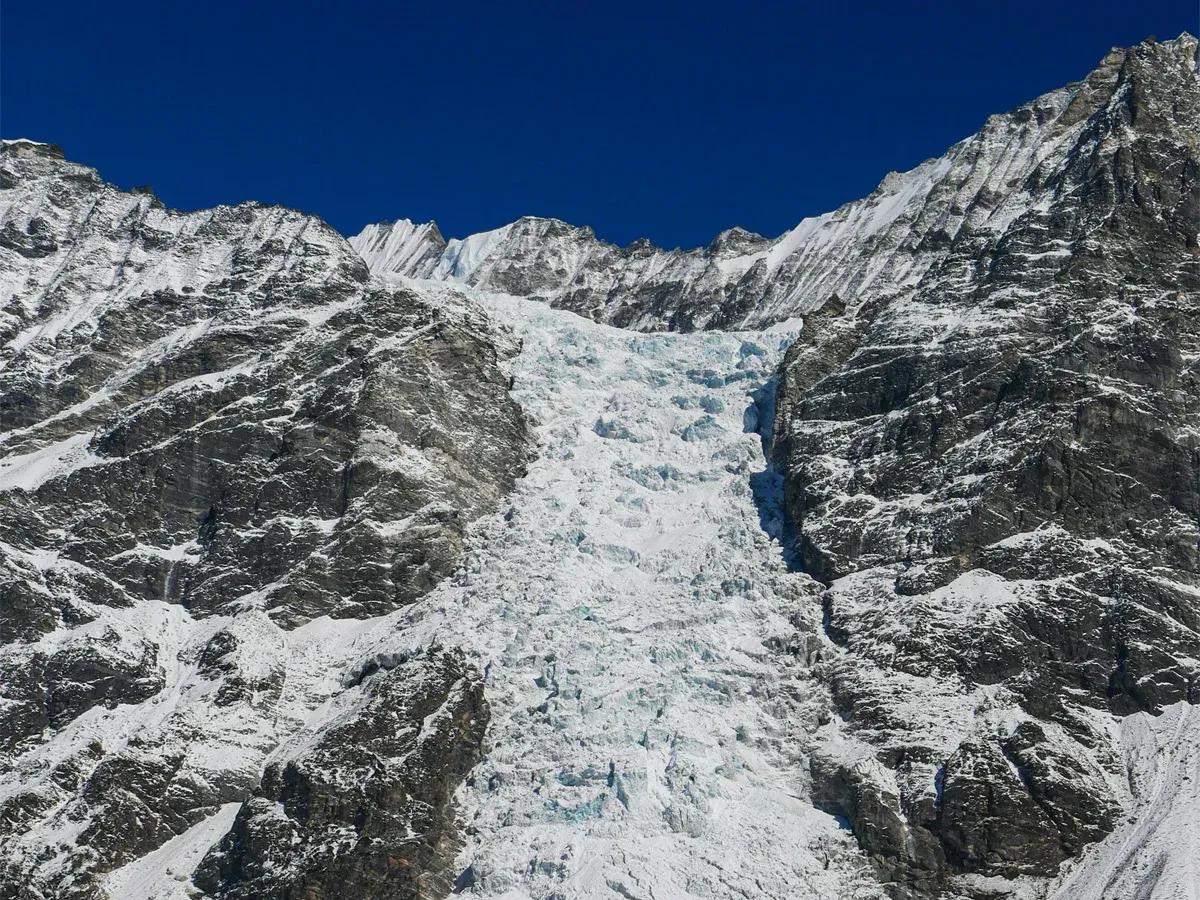
    Today the trek through the village of Langtang we will pass many stone mani walls, covered with Tibetan inscriptions to please the gods. It then climbs up gradually past the small villages of Mumdu and Sindum. The trail continues through yak pastures. After crossing the Langtang Khola to its south bank we climb up through a landscape scattered with large boulders to a moraine where we will have the first views of Kyanjin Gompa ahead of us, and the dramatic icefall flowing from Langtang Lirung and Kinshung (6781m) north of us. Beyond the trail lead through some rocks and climb towards the gompa, then make a short descend to Kyanjin Gompa (3870m). Afternoon looks around the Kyanjin Gompa. Overnight at Teahouse/Lodge.

    Day 07

    Hike up to Kyanjin Ri (4,773 m) or Tsergo Ri (4,984 m)

    Duration:
    ~4-8 hours
    Accommodation:
    Lodge
    Today the trek through the village of Langtang we will pass many stone mani walls, covered with Tibetan inscriptions to please the gods. It then climbs up gradually past the small villages of Mumdu and Sindum. The trail continues through yak pastures. After crossing the Langtang Khola to its south bank we climb up through a landscape scattered with large boulders to a moraine where we will have the first views of Kyanjin Gompa ahead of us, and the dramatic icefall flowing from Langtang Lirung and Kinshung (6781m) north of us. Beyond the trail lead through some rocks and climb towards the gompa, then make a short descend to Kyanjin Gompa (3870m). Afternoon looks around the Kyanjin Gompa. Overnight at Teahouse/Lodge.

    Day 08

    Kyanjin Gompa trek to Ngegang (4,000 m)

    Duration:
    ~5-6 hours
    Accommodation:
    Tent Camp
    Today trek trail is very short, Cross the Langtang Khola below the kyanjin Gompa then makes steep climb along the ridge on the south side of the valley through a forest of juniper and rhododendron. Finally becoming more gentle, the trek trail reaches the Yak pasture at Ngegang (4000m) where available good place to camp before the climb to the Ganja La Pass. Overnight at Tent Camp.

    Day 09

    Ngegang trek to Keldang over the Ganja La Pass (5,130 m)

    Duration:
    ~7-8 hours
    Accommodation:
    Tent Camp
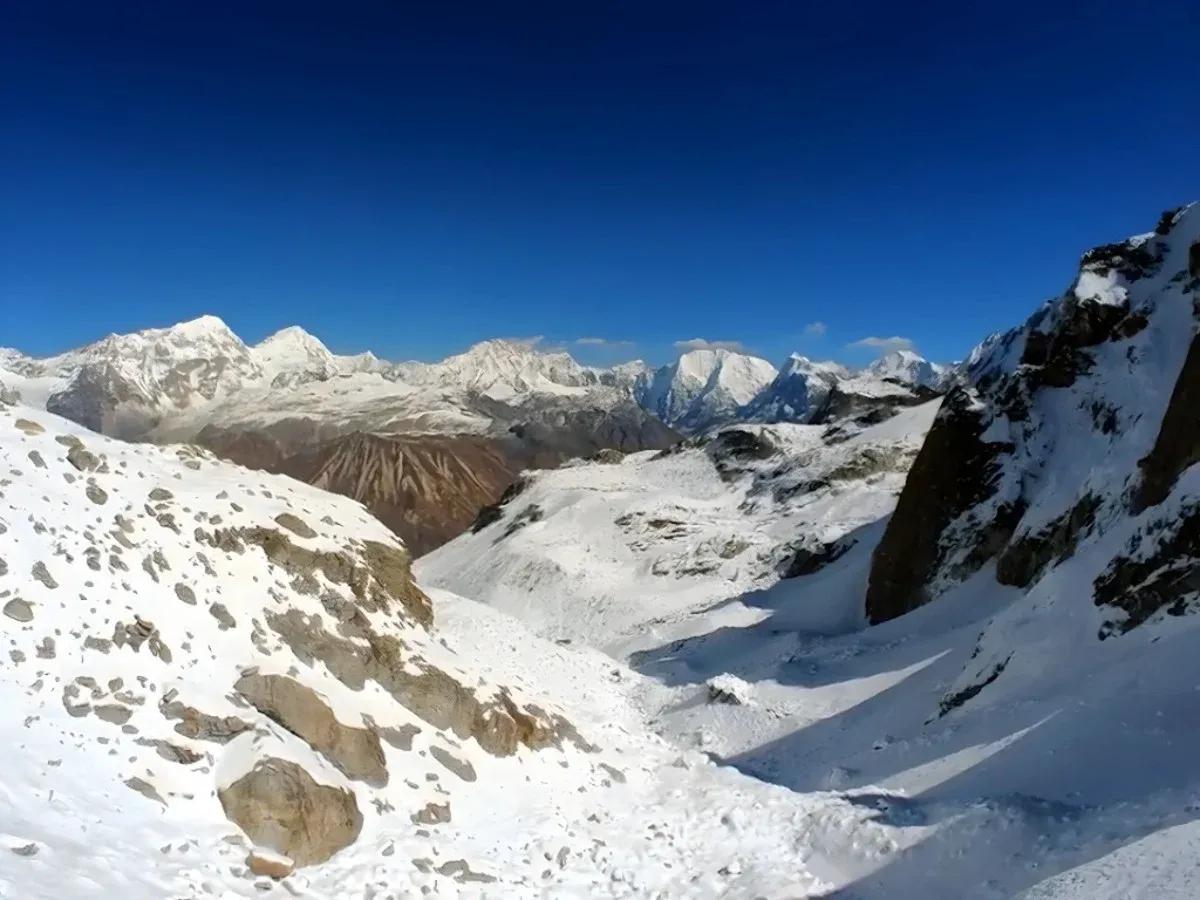
    Today we are follows the trail south of our camp. The trek continues climbing steeply towards the Pass. As the trail climbs higher and comes under the shadow of the above 5800m peaks to the south. The trail normally covered by snow. Turning south-west, the trail makes the final steep climbs to the Ganja La Pass at 5130m. The view to north from the pass of Langtang Lirung and snow peaks in Tibet including Shisha Pangma (8013m). Clear day there are also views of many ranges to the south. West of Pass is Naya Kanga (5844m), previously named Ganja La Chuli. After the pass we are descend steeply to Yangri Khola (4400m) then drops quickly down rough slope to the stream. Follow the stream for some distance through grassy meadows, the trail reaches a few Goths at Keldang (4270m). Overnight at Tent Camp.

    Day 10

    Keldang trek to Dukpu (4,080 m)

    Duration:
    ~5-7 hours
    Accommodation:
    Tent Camp
    Today is long and strenuous day as the descends along a ridge. The trail many ups and downs to Dukpu. In Winner, there is no water from Keldang to bottom of the ridge so better to take packed food for the trail but monsoon and usually October and November no problem with water. The trail heads down the valley, but stay high above the river, finally meet the ridge itself then follow the ridge line to Dukpu (4080m). Overnight at Tent Camp.

    Day 11

    Dukpu trek to Tarke Ghyang (2,590 m)

    Duration:
    ~5-6 hours
    Accommodation:
    Lodge
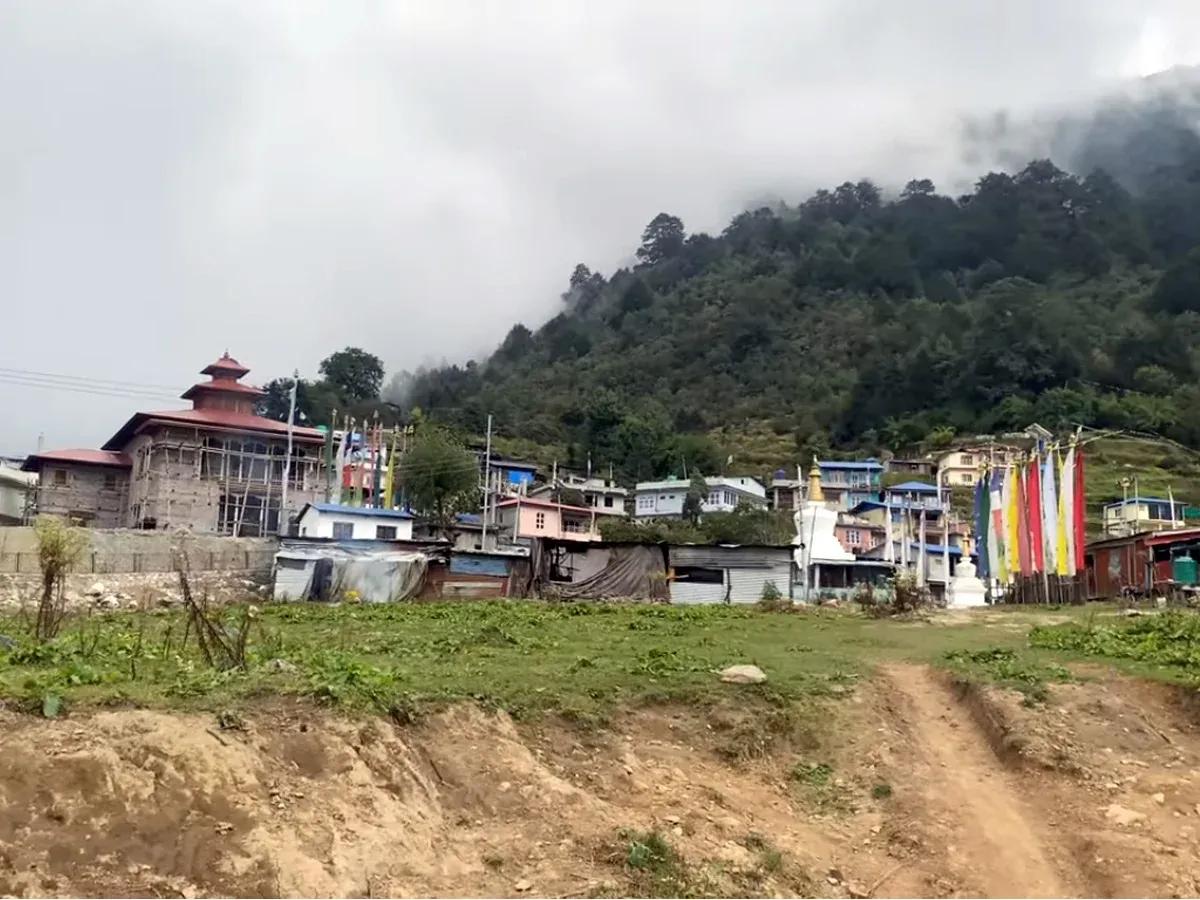
    Today the trek trail descends further along the ridge then makes a 180m climb to a pass at 4020m. From the top of Pass offers magnificent views of Dorje Lakpa and scenery some part of Everest range, as far as the peak of Numbur in Khumbu. After pass you trek through pine and rhododendron forest past tiny herders settlements to a ridge high above Tarke Gyang. Then descend steeply to Gekye Gompa (3020m) through Ama Yangri Danda (3771m) which is the best view point in Helambu region. The trail continues to the large Sherpa village Tarke Ghyang (2590m) Overnight at Teahouse/Lodge.

    Day 12

    Tarke Gyang trek to Sermathang (2,610 m)

    Duration:
    ~4-5 hours
    Accommodation:
    Lodge
    The trail leaves the village and makes a sweep around the wide valley to the pretty Sherpa village of Ganyul at 2520 meter. The people in this village practice Drukpa Kagyu Buddhism, the same as the national religion of Buthan. From here the trail drops over a ridge but soon starts climbing up again through deep forests, crossing a number of streams to a crest at 2620 meter. We continue our way passing the large gompa at Chumnik, before another gentle climb leads to the village of Sermathang (2610m). Afternoon is better to visit Gompa and village to see their life style and culture. Overnight at Teahouse/Lodge.

    Day 13

    Sermathang trek to Melamchi Pul Bazaar (880 m)

    Duration:
    ~5-6 hours
    Accommodation:
    Lodge
    Today trek trail from Sermathang the trail follows the ridge all the way down to Malemchi Pul Bazaar, making a drop of 1730 meter. The trail passes chorten after chorten in the settlements of Nigale, Gyalsha and Raithani Gyang. From here we descent through chir pine forest to yet another chorten at Kakani, which is the last Sherpa village on the trek, and we now enter the lowlands inhabited by Brahmans and Chhetris. From Kakani the trail drops steeply to the attractive village of Dubhachaur in a saddle at 1610 meter. Continuing further down the ridge our trail will eventually bring us to a large suspension bridge which crosses the Indrawati river and brings us into Malemchi Pul Bazaar (880m) overnight at Teahouse/Lodge.

    Day 14

    Melamchi Pul drive to Kathmandu (1,350 m)

    Duration:
    ~3-4 hours
    Accommodation:
    Hotel
    From Melamchi Pul we can take local transportation, or have our private transport to bring us back to Kathmandu. Drive from Melamchi Pul Bazaar to Kathmandu which takes about five hours. You travel through gravel and bumpy path up to Lamidanda and then you follow the pitched road up to Kathmandu though Banepa & Dhulikhel highway. Overnight at Hotel.

    Day 15

    Depart Kathmandu

    Duration:
    ~30 minutes
    After breakfast, End of our services with departure transfer to the Kathmandu airport to board flight for your onward destination.
    Personalize Your Experience

    Have your own ideas or special requirements? We're more than happy to tailor the itinerary to match your schedule, interests, and travel preferences. Let us help you create a personalized adventure that's truly yours.

    Customize My Trip

    Pricing Details

    Price Includes

    • Airport pick up and airport drop by private transportation
    • Accommodation in Kathmandu with breakfast (2 and above participants get twin sharing room)
    • Historical monument city sightseeing with a tour guide
    • Historical monuments city sightseeing transportation by Non A/C Comfortable Vehicle
    • Kathmandu sightseeing/monument visits Entrance fees
    • Kathmandu to Syabrubesi overland transportation by public bus
    • One Experienced English-speaking, government licensed and ministry of tourism trained trekking guide and his food, accommodation, and salary
    • Porters carrying your luggage while trekking (Two guests get one porter carrying a maximum of 25 kg of luggage)
    • 8 Nights Teahouse Trek accommodation, one room with two beds sharing with two people
    • 3 Nights Camping Trek accommodation on tented camp (Two men tent share with two people)
    • All camping gear, tents, mattress food and staffs for Ganja La Pass
    • Trekking meals Breakfast, lunch, and Dinner//Main course a day in teahouse and Camping
    • Dessert (Fresh Fruits/Chocolate) after dinner on behalf of the company
    • Langtang national park entry permit
    • Trekker's Information Management system (TIMS) card
    • Melamchi Pul to Kathmandu overland transportation by public bus
    • Insurance for Nepalese Camp staff (Guide, Cook, Sherpa, kitchen boy and Porters)
    • Nepal Government taxes and office service charge

    Price Excludes

    • Lunch and Dinner during the stay in Kathmandu
    • Private vehicle (Kathmandu to Syabrubesi) (USD 200 each jeep and Melamchi-Kathamdnu USD$100 Per Jeep)
    • Extra night accommodation in Kathmandu because of early arrival, late departure, early return from mountain (due to any reason) than the scheduled itinerary
    Important Note

    The pricing is based on our standard plan suited for most customers. We also provide tailored solutions including both Budget and Premium Plans. Feel free to reach out to us directly.

    Gear Up for Your Trek

    Here’s a concise guide of essentials to prepare smartly for your trek.

    • Thermal underwear (top & bottom)
    • Moisture-wicking T-shirts (2–3)
    • Thermal or wool socks (4–5 pairs)
    • Underwear (quick-dry)
    • Fleece jacket or pullover
    • Lightweight wool sweater
    • Insulated jacket (-10°C to -20°C)
    • Waterproof shell jacket with hood
    • Waterproof trousers
    • Lightweight hiking pants (2 pairs)
    • Windproof softshell (optional)
    • Warm hat, sun hat, buff or neck gaiter
    • Gloves (liner + insulated)
    • Sleepwear and casual evening clothes
    • Waterproof trekking boots (broken-in)
    • Camp shoes or sandals
    • Wool trekking socks (3–4 pairs)
    • Sock liners (optional)
    • Duffle bag (60–80L for porter)
    • Daypack (25–35L with rain cover)
    • Backpack rain cover
    • Garbage bags / bag liners
    • Packing cubes or dry bags (optional)
    • Sleeping bag (-10°C to -20°C rated)
    • Sleeping bag liner
    • Trekking poles
    • Headlamp (extra batteries)
    • Water bottles (2 x 1L Nalgene)
    • Water purification tablets or filter
    • Sunglasses with UV protection
    • Dry snacks (energy bars, trail mix)
    • Pocket knife (optional)
    • Altitude sickness meds (Diamox)
    • Blister treatment (moleskin, Compeed)
    • Biodegradable soap & shampoo
    • Toothbrush & toothpaste
    • Quick-dry towel
    • Wet wipes & hand sanitizer
    • Toilet paper
    • Lip balm (SPF) & sunscreen (SPF 30+)
    • Nail clippers, tweezers
    • Razor (optional)
    • Personal first aid kit
    • Prescription medications
    • Electrolyte powder
    • Basic cold/flu medicine
    • Power bank
    • Charging cables
    • Travel adapter (Nepal types C, D, M)
    • Phone / camera
    • Offline maps or trekking guide app
    • Notebook, pen
    • Copies of passport & permits
    • Extra passport photos
    • Cash (Nepali rupees)
    • Passport (original)
    • Travel insurance with high-altitude coverage
    • TIMS card
    • Sagarmatha National Park permit
    • Lukla flight tickets (round trip)
    Important Note

    Sleeping bags and down jackets are available for rent in Kathmandu, while other trekking gear can be easily purchased. At Alpine Adventure Club, we’ll make sure all your essentials are ready so you’re fully prepared for your adventure.

    Frequently Asked Questions

    Overview & Essentials

    Typically, packages include accommodation, meals during the trek, guide and porter services, permits, and ground transportation. Flight costs, insurance, and personal expenses are usually excluded.
    While prior trekking experience helps, most treks are designed to be achievable with average fitness. Some high-altitude treks may require conditioning or preparation beforehand.
    There is no strict age limit, but participants should be reasonably fit. Trekkers above 60 or with health conditions should consult a doctor before the trip.

    Arrival & Visas

    Most travelers require a tourist visa, which can often be obtained on arrival or online. Check your country’s embassy website for up-to-date visa policies.
    Airport pickup is often included in the tour package. If not, taxis or pre-arranged transport options are available and reliable.
    Yes, arriving early is a great way to rest and adjust before your trek. We can help arrange additional accommodations if needed.

    Health & Safety

    Guides are trained in first aid and will assist you immediately. In serious cases, evacuation (often by helicopter) can be arranged. Travel insurance with emergency coverage is strongly recommended.
    Yes, especially above 2,500 meters. Our itineraries are designed with gradual acclimatization and rest days to help prevent it. Drinking water, eating well, and resting are key.
    Yes, all certified guides are trained in altitude awareness, first aid, and emergency protocols to ensure your safety throughout the trek.

    Weather & Temperature

    Spring (March–May) and autumn (September–November) are the most popular trekking seasons with stable weather and clear skies.
    Temperatures can drop significantly at night, especially at higher altitudes. Days are usually moderate, but proper layering is important.
    Yes, extreme weather can cause delays, especially for flights or high passes. We always try to adjust plans safely and flexibly.

    Accommodation & Facilities

    Accommodations are usually in local lodges or tea houses with basic amenities—clean beds, shared bathrooms, and dining halls.
    Some lodges offer hot showers for an additional fee, but availability may be limited at higher altitudes.
    Charging is available in most lodges for a fee. Power supply may be limited or solar-based, so bring a power bank as backup.

    Packing & Gear

    You’ll need layered clothing, good trekking boots, a daypack, a sleeping bag (if not provided), and basic toiletries. A detailed packing list will be shared upon booking.
    Yes, you can rent most essential gear like down jackets, sleeping bags, and poles from local shops at affordable rates.
    Keep your daypack light with only essentials (water, snacks, jacket). The porter will carry your main bag, usually limited to 10–15 kg.

    Trekker Reviews

    Nathan Reynolds (Australia)

    Nathan Reynolds (Australia)

    Verified

    "I highly recommend Alpine Adventure Club Treks & Expedition. Binod Thapa and his staff are friendly and professional, ensuring complete satisfaction. The guide and porter were knowledgeable and organized the best accommodations, making the trek comfortable and enjoyable. All my questions were promptly answered, easing any concerns about booking online. Prices were better than if I arranged it myself. Overall, a hassle-free, great experience in Nepal thanks to their excellent organization."

    USD $2585/ person
    ℹ️ Limited seats available for selected departures
    Book NowSend an InquiryCustomize Your Adventure
    USD $2585 / pp
    Book Now
    International and domestic air tickets
  • Nepal visa fee
  • Personal trekking equipment and Clothing
  • Wire Transfer charge or Credit card service charge as company rule
  • Alcoholic beverages, laundry, Telephone calls and all types of hot drinks in Trekking
  • Soft drinks such as cola, mineral water etc
  • Hot water, battery charge and hot shower charge during the trek (If need to pay)
  • Personal nature expenses and Tipping (Tips)
  • High risk medical / travel insurance and First aid kit
  • Expenses resulting from delays beyond our control in case of weather, flight cancellations, or natural calamities
  • Emergency rescue evacuation (if needed)
  • Any other things not mentioned
  • Similar Treks You Might Like