• Home
  • Nepal
  • Other Destinations
  • Blog
  • Company
Chat on Whatsapp

High-altitude treks, real local guides, and straight-up advice from the Himalayas.

TripAdvisor
Lonely Planet

Stay Ahead of the Mountains

Get trek updates, permit alerts, and seasonal tips straight from the Himalayas.

Contacts

Kaldhara-16, Kathmandu, Nepal

Tel: +977 1 5360765

WhatsApp: +977 9841353904

Email:[email protected] ,
[email protected]

Quick Links

  • Legal Documents
  • Terms & Conditions
  • About Us
  • Favourites
  • Blog

Activities

  • Trekking
  • Tours
  • Jungle Safari
  • Day Hiking
  • Helicopter Tours
  • Jeep Tours

Payment Methods

Payment Method
Payment Method
Payment Method

Recognized By

Association Logo
Association Logo
Association Logo
Association Logo
KEEP

© 2026 Alpine Adventure Club. All Rights Reserved

Built by Bishal

  1. Home
  2. Nepal
  3. trekking
  4. Everest
  5. Everest Three Passes Trek
Save

Everest Three Passes Trek

5.0 (26 reviews in Tripadvisor)
Recommended by 99% of travellers
Save
Everest Three Passes trek
Everest Three Passes Trek
Everest Three Passes trek
Everest Three Passes Trek
1 / 5

Everest Three Passes Trek: Key Facts at a Glance

  • Location
    Nepal
  • Region
    Everest
  • Duration
    21 days
  • Group Size
    Min. 1 Pax
  • Max Elevation
    5,545 m
  • Difficulty
    Strenuous
  • Accommodation
    Hotel/Lodge
  • Best Seasons
    Spring and Autumn
  • Start Point
    Kathmandu
  • End Point
    Kathmandu
  • Permit
    Required
  • Food
    Three Meals/Day

Introduction to Everest Three Passes Trek

The Everest Three Passes Trek is a challenging high-altitude circuit in Nepal’s Khumbu region, designed for experienced trekkers seeking an adventurous route through some of the most remote and dramatic landscapes of the Everest region. The journey crosses Renjo La, Cho La, and Kongma La, while also taking in Gokyo Valley, Everest Base Camp, Kala Patthar, and traditional Sherpa communities.

The trek begins with a scenic flight to Lukla (2,840 m) from Kathmandu or Ramechhap (Manthali Airport), depending on the season and flight schedule. From Lukla, the trail follows the Dudh Koshi Valley through Phakding and Namche Bazaar before heading toward the quieter northern part of the Khumbu. The route passes through Thame, Marlung, and Lungden, with the landscape becoming increasingly rugged as it approaches the first high pass.

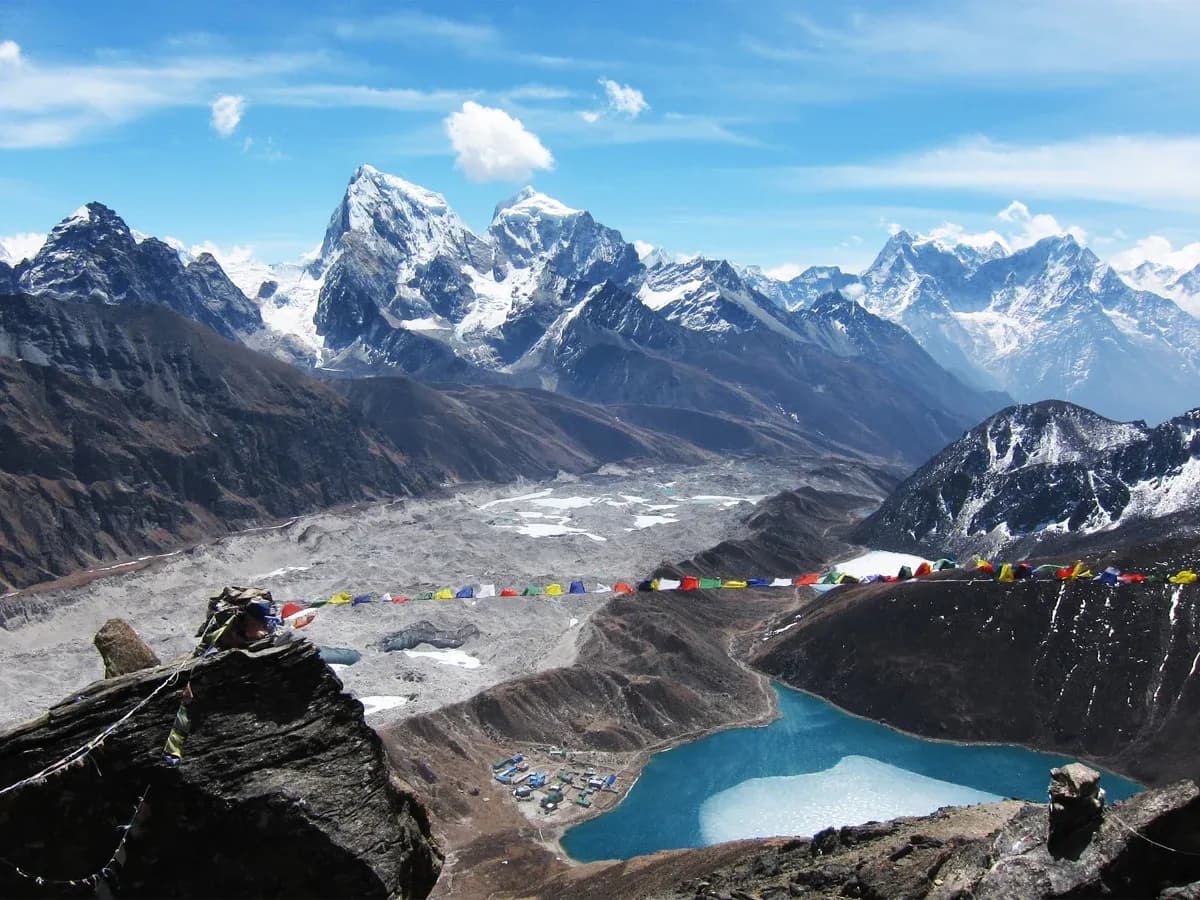
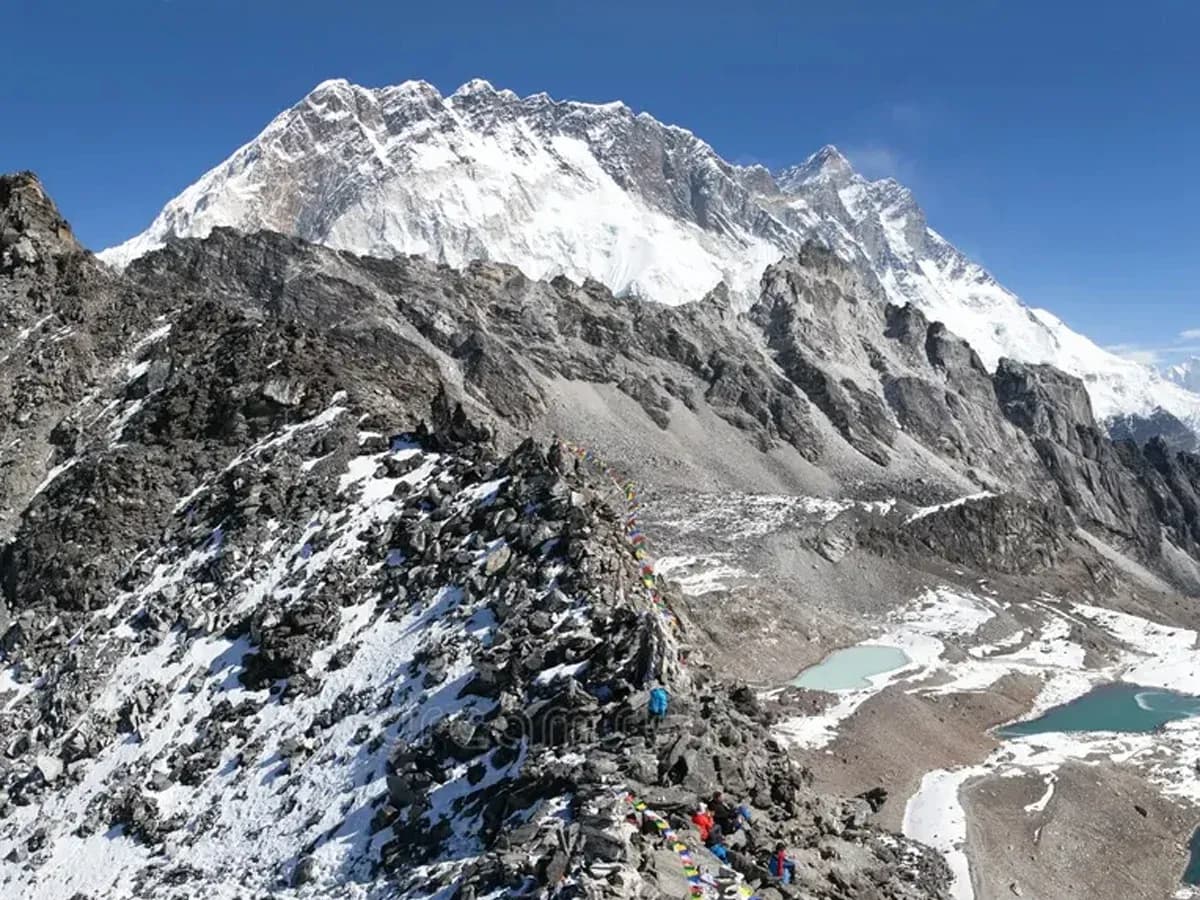
The first major crossing is Renjo La Pass (5,360 m). The ascent includes steep and rocky sections before reaching the pass, where the surrounding mountains open into a broad Himalayan panorama. From Renjo La, the trail descends toward the Gokyo Valley, known for its turquoise lakes, glaciers, and impressive mountain setting. An optional hike to Gokyo Ri (5,357 m) provides an additional viewpoint over the surrounding peaks.

From Gokyo, the trail continues toward Thangnak and the Ngozumpa Glacier before reaching Cho La Pass (5,420 m). This section involves rugged high-altitude terrain and may require extra care when snow or ice is present. After descending to Dzongla, the route joins the trail toward Lobuche and Gorak Shep, followed by a visit to Everest Base Camp (5,364 m) and an early morning hike to Kala Patthar (5,545 m). The final crossing is Kongma La Pass (5,535 m), followed by a descent toward Chhukung, where an optional hike to Chhukung Ri (5,550 m) offers another opportunity to enjoy the surrounding Himalayan views.

From Chhukung, the trail descends through Dingboche, Pangboche, and Tengboche, with the landscape gradually becoming greener as the elevation decreases. At Tengboche, the renowned Tengboche Monastery provides an important cultural highlight. The journey then continues through the lower Khumbu toward Namche Bazaar and Lukla before the return flight to Kathmandu or Ramechhap.

Throughout the journey, trekkers encounter a changing mix of alpine valleys, glaciers, high mountain passes, forests, and traditional Sherpa villages. Teahouse accommodation along the route provides an opportunity to experience local hospitality, while monasteries, prayer wheels, chortens, and mani walls reflect the Buddhist traditions of the Khumbu.

The 21-day Everest 3 Passes Trek requires good physical fitness, preparation for demanding walking days, and previous experience at high altitude. Experienced local guides provide support throughout the journey, carefully monitoring altitude, weather, trail conditions, and walking pace. With thorough preparation and professional guidance, this challenging circuit offers an exceptional opportunity to experience Renjo La, Cho La, Kongma La, Gokyo Lakes, Everest Base Camp, Kala Patthar, and Chhukung Ri as part of an unforgettable Himalayan journey.

Highlights of the Everest Three Passes Trek

  • Cross Renjo La (5,360 m), Cho La (5,420 m), and Kongma La (5,535 m)
  • Explore the beautiful Gokyo Valley and Gokyo Lakes
  • Optional hike to Gokyo Ri (5,357 m) for panoramic mountain views
  • Cross the rugged Ngozumpa Glacier en route to Cho La
  • Visit Everest Base Camp (5,364 m) and hike to Kala Patthar (5,545 m)
  • Optional hike to Chhukung Ri (5,550 m)
  • Experience traditional Sherpa villages and Buddhist culture
  • Visit the historic Tengboche Monastery
  • Walk through glaciers, alpine valleys, forests, and high mountain terrain
  • A challenging 21-day Himalayan circuit for experienced trekkers
Trip Itinerary for Everest Three Passes Trek

Detailed Day-to-Day Itinerary

Day 01 Arrive in Kathmandu

Duration:
~30 minutes
Accommodation:
Hotel
Upon arrival at Tribhuvan International Airport, our representative will meet you and transfer you to your hotel. After check-in, you can relax or explore the nearby area. In the evening, our team will provide a detailed trek briefing covering the route, walking conditions, altitude, and preparations for the journey.

Day 02 Kathmandu Sightseeing and Trek Preparation

Duration:
~4-5 hours
Accommodation:
Hotel
After breakfast, enjoy a guided sightseeing tour of Kathmandu Durbar Square, Pashupatinath Temple, Swayambhunath Stupa, and Boudhanath Stupa. These UNESCO World Heritage Sites offer an introduction to Nepal’s history, culture, architecture, and religious traditions. Later, meet your trekking guide and complete the final preparations for the trek.

Day 03 Fly to Lukla and Trek to Phakding (2,610 m)

Duration:
~3-4 hours
Accommodation:
Lodge
We take an early flight to Lukla (2,840 m), the gateway to the Everest region. During the peak trekking seasons, flights may operate from Ramechhap (Manthali Airport), with a road transfer from Kathmandu. After landing in Lukla, we begin the trek through Chheplung and cross the Thado Koshi before reaching Ghat. The trail then follows the Dudh Koshi Valley through forested sections and riverside settlements to Phakding, where we spend the night.

Day 04 Trek from Phakding to Namche Bazaar (3,440 m)

Duration:
~6-7 hours
Accommodation:
Lodge
The trail follows the Dudh Koshi River through Toktok and Benkar, passing pine and rhododendron forests and crossing several suspension bridges. After reaching Monjo, we enter Sagarmatha National Park and continue through Jorsalle. From here, the route follows the river before climbing steadily toward Namche Bazaar. As we gain elevation, the surrounding mountain views become more impressive.

Day 05 Acclimatization Day in Namche Bazaar

Duration:
~2-3 hours
Accommodation:
Lodge
We spend the day in Namche Bazaar to prepare for the higher elevations ahead. Depending on your interests and how you feel, you can take a short hike to a nearby viewpoint or hike to Everest View Hotel (3,880 m) with your guide. The hike offers views of Mount Everest, Lhotse, Nuptse, Ama Dablam, and Thamserku. After returning to Namche, you can explore the town, visit local shops and cafés, or relax at the lodge.

Day 06 Trek from Namche Bazaar to Thame (3,800 m)

Duration:
~4-5 hours
Accommodation:
Lodge
Leaving the main Everest trail, we turn toward the Bhote Koshi Valley and follow a quieter route to Thame. The trail passes mani walls, prayer flags, stone-built homes, and cultivated slopes. Thame is a historic Sherpa settlement known for its traditional character and peaceful mountain surroundings.

Day 07 Trek from Thame to Lungden (4,300 m)

Duration:
~5-6 hours
Accommodation:
Lodge
The trail continues through the upper Bhote Koshi Valley, passing traditional Sherpa settlements and the village of Marlung. The route follows open mountain terrain with mani walls, prayer flags, and views of the surrounding peaks. As we continue toward Lungden, the landscape becomes increasingly rugged and alpine, preparing us for the Renjo La Pass crossing the following day.

Day 08 Trek from Lungden to Gokyo via Renjo La Pass (5,360 m)

Duration:
~7-8 hours
Accommodation:
Lodge
Today is the first major pass-crossing day. We climb from Lungden toward Renjo La, following steep and rocky sections where snow may be present depending on the season. From the pass, the route opens to impressive views of Everest, Cho Oyu, Lhotse, Makalu, and surrounding peaks. We then descend toward the Gokyo Valley, where turquoise lakes and dramatic mountain scenery provide a memorable end to the day.

Day 09 Hike to Gokyo Ri and Trek to Thangnak (4,700 m)

Duration:
~6-7 hours
Accommodation:
Lodge
An early morning hike to Gokyo Ri offers a broad panorama of the surrounding Himalayan peaks and Gokyo Valley. After returning to Gokyo, we continue toward Thangnak through the rugged landscape around the Ngozumpa Glacier. The trail becomes increasingly remote and alpine as we approach the next high pass.

Day 10 Trek from Thangnak to Dzongla via Cho La Pass (5,420 m)

Duration:
~7-8 hours
Accommodation:
Lodge
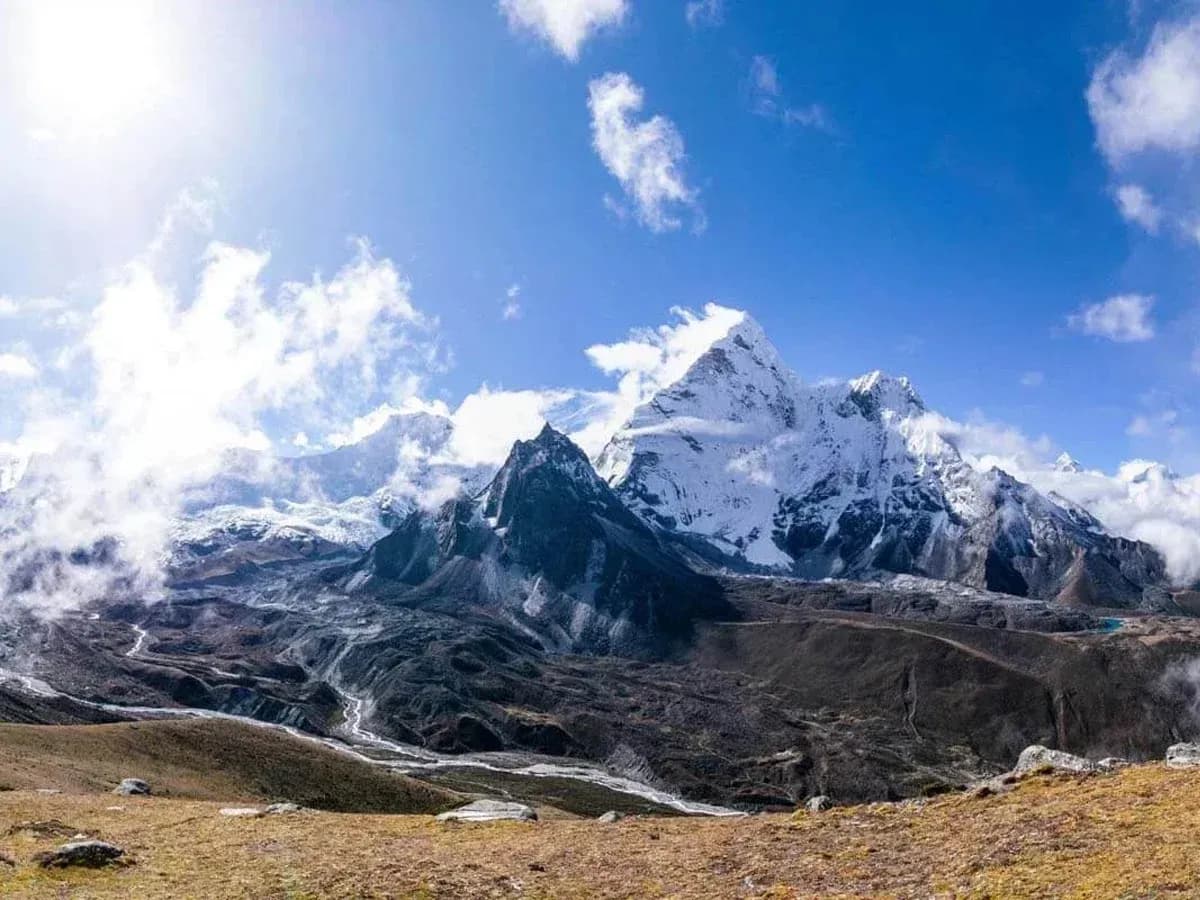
We set out toward Cho La Pass, one of the more demanding sections of the trek. The route involves steep and rocky terrain, while snow and ice may be present depending on the weather and trail conditions. After crossing the pass, we descend toward Dzongla, with impressive views of Cholatse, Ama Dablam, Lobuche, and the surrounding mountains.

Day 11 Trek from Dzongla to Lobuche (4,910 m)

Duration:
~4-5 hours
Accommodation:
Lodge
The trail traverses the high valley from Dzongla to Lobuche. Compared with the previous day, the walking distance is shorter, providing time to recover after the Cho La crossing. The route continues through a rugged mountain environment with views of Lobuche Peak, Pumori, Nuptse, and other surrounding peaks.

Day 12 Trek from Lobuche to Gorak Shep (5,140 m) and Hike to Everest Base Camp (5,364 m)

Duration:
~7-8 hours
Accommodation:
Lodge
We follow the rugged glacial landscape toward Gorak Shep, passing rocky moraine and views of Pumori, Khumbutse, Lingtren, and the Khumbu Glacier. After a break in Gorak Shep, we continue toward Everest Base Camp. The trail crosses challenging glacial terrain before reaching the base camp area, where we can view the Khumbu Icefall and surrounding peaks. We then return to Gorak Shep for the night.

Day 13 Hike to Kala Patthar and Trek to Lobuche (4,910 m)

Duration:
~5-6 hours
Accommodation:
Lodge
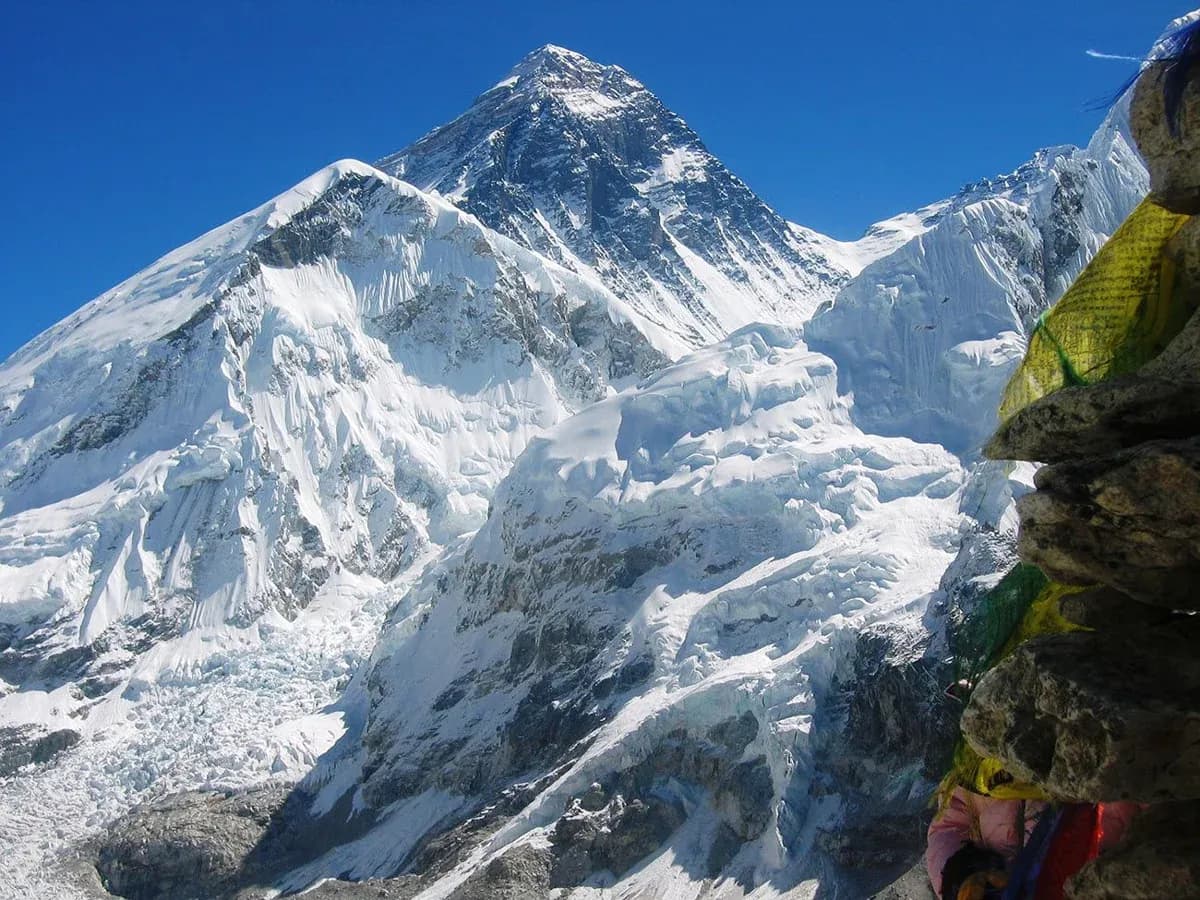
We start early for the ascent to Kala Patthar, one of the highest points on the route. The climb is demanding, but the summit rewards us with exceptional views of Mount Everest, Nuptse, Lhotse, Pumori, Ama Dablam, and the Khumbu Glacier. After returning to Gorak Shep for breakfast, we continue toward Lobuche.

Day 14 Trek from Lobuche to Chhukung via Kongma La Pass (5,535 m)

Duration:
~7-8 hours
Accommodation:
Lodge
The third major pass crossing begins with a challenging ascent toward Kongma La. The route involves steep and rocky terrain, with snow possible depending on the season and weather. After crossing the pass, we descend toward the Imja Valley and continue to Chhukung, surrounded by impressive Himalayan peaks.

Day 15 Optional Hike to Chhukung Ri and Trek to Dingboche (4,410 m)

Duration:
~5-7 hours
Accommodation:
Lodge
An optional early morning hike to Chhukung Ri provides wide views of Makalu, Lhotse, Nuptse, Ama Dablam, and Island Peak. After returning to Chhukung, we continue along a gradual trail toward Dingboche. The descent provides a welcome change after several demanding days at higher elevations.

Day 16 Trek from Dingboche to Tengboche (3,867 m)

Duration:
~4-5 hours
Accommodation:
Lodge
The trail descends through the Imja Valley and passes Pangboche before crossing the Imja Khola. We then continue through pine and rhododendron forests toward Tengboche. The village is home to the renowned Tengboche Monastery, an important Buddhist center in the Khumbu, with an impressive mountain backdrop.

Day 17 Trek from Tengboche to Monjo (2,840 m)

Duration:
~6-7 hours
Accommodation:
Lodge
We leave Tengboche and descend through the forest toward Phunki Tenga, where the trail crosses the Dudh Koshi River. From there, we climb gradually to Kyangjuma and continue along the trail toward Namche Bazaar. After Namche, the route continues downhill through Jorsalle and along the Dudh Koshi Valley, passing forested sections and suspension bridges before reaching Monjo.

Day 18 Trek from Monjo to Lukla (2,840 m)

Duration:
~4-5 hours
Accommodation:
Lodge
Our final trekking day follows the Dudh Koshi Valley through Benkar and Phakding before continuing toward Lukla. The trail passes familiar mountain settlements, suspension bridges, and forested sections before gradually climbing toward Lukla. After reaching the town, we have time to rest and enjoy the final evening in the Khumbu.

Day 19 Fly from Lukla to Kathmandu or Ramechhap

Duration:
~35 minutes
Accommodation:
Hotel
We take the scheduled flight from Lukla to Kathmandu or Ramechhap (Manthali Airport), depending on the season and flight schedule. Upon landing, we transfer to your hotel and spend the rest of the day relaxing after the trek or enjoying free time in Kathmandu.

Day 20 Reserve Day in Kathmandu

Duration:
~Free hours
Accommodation:
Hotel
This reserve day provides flexibility in case of flight delays caused by mountain weather or other unforeseen circumstances. If the journey operates as planned, the day can be used to relax, explore Kathmandu, visit local attractions, or do some last-minute shopping.

Day 21 Depart from Kathmandu

Duration:
~30 minutes
Today marks the end of the Everest 3 Passes Trek. After breakfast, our representative will arrange your transfer to Tribhuvan International Airport according to your flight schedule for your onward journey.
Personalize Your Experience

Have your own ideas or special requirements? We're more than happy to tailor the itinerary to match your schedule, interests, and travel preferences. Let us help you create a personalized adventure that's truly yours.

Customize My Trip

Everest Three Passes Trek Map and Elevation

Everest Three Passes Trek Route Map
Everest Three Passes Trek Elevation Profile

Pricing Details

Price Includes

  • Airport pickup and drop-off by private vehicle
  • Kathmandu sightseeing with a professional city guide, private vehicle, and monument entrance fees
  • 3-star standard hotel accommodation in Kathmandu on a twin-sharing basis for two or more participants, including breakfast
  • Domestic flights between Kathmandu/Ramechhap and Lukla, including return flights for guests and guide
  • Private transportation between Kathmandu and Ramechhap and return when flights operate from Manthali Airport
  • Normal teahouse/lodge accommodation during the trek on a twin-sharing basis for two or more participants
  • Three meals a day during the trek: breakfast, lunch, and dinner
  • Fresh fruit or chocolate dessert after dinner during the trek
  • Government-licensed, experienced, English-speaking trekking guide
  • Porter service during the trek, with one porter for every two guests and a maximum load of 20 kg per porter
  • Insurance for Nepalese staff, including trekking guides and porters
  • Sagarmatha National Park entry permit
  • Khumbu Pasang Lhamu Rural Municipality fee
  • Nepal Government taxes and company service charges

Price Excludes

  • Lunch and dinner in Kathmandu
  • International airfare
  • Nepal entry visa fee
  • Personal trekking equipment and clothing
  • High-risk medical and travel insurance, including emergency rescue and evacuation coverage
  • Personal first-aid kit and medications
  • Personal expenses such as laundry, telephone calls, Wi-Fi, and charging
  • Alcoholic and soft drinks, bottled or mineral water, and hot drinks during the trek
  • Hot showers and hot water charges where applicable
  • Tips for guides, porters, and other staff
  • Bank transfer or credit card processing charges
  • Additional accommodation or meals in Kathmandu resulting from early arrival, late departure, or early return from the mountain outside the scheduled itinerary
  • Expenses resulting from weather, road conditions, natural disasters, strikes, or other circumstances beyond our control
  • Any services or expenses not specifically mentioned under Price Includes
Important Note

The pricing is based on our standard plan suited for most customers. We also provide tailored solutions including both Budget and Premium Plans. Feel free to reach out to us directly.

Everest Three Passes Trek Packing List

Here’s a concise guide of essentials to prepare smartly for your trek.

  • Thermal underwear (top & bottom)
  • Moisture-wicking T-shirts (2–3)
  • Thermal or wool socks (4–5 pairs)
  • Underwear (quick-dry)
  • Fleece jacket or pullover
  • Lightweight wool sweater
  • Insulated jacket (-10°C to -20°C)
  • Waterproof shell jacket with hood
  • Waterproof trousers
  • Lightweight hiking pants (2 pairs)
  • Windproof softshell (optional)
  • Warm hat, sun hat, buff or neck gaiter
  • Gloves (liner + insulated)
  • Sleepwear and casual evening clothes
  • Waterproof trekking boots (broken-in)
  • Camp shoes or sandals
  • Wool trekking socks (3–4 pairs)
  • Sock liners (optional)
  • Duffle bag (60–80L for porter)
  • Daypack (25–35L with rain cover)
  • Backpack rain cover
  • Garbage bags / bag liners
  • Packing cubes or dry bags (optional)
  • Sleeping bag (-10°C to -20°C rated)
  • Sleeping bag liner
  • Trekking poles
  • Headlamp (extra batteries)
  • Water bottles (2 x 1L Nalgene)
  • Water purification tablets or filter
  • Sunglasses with UV protection
  • Dry snacks (energy bars, trail mix)
  • Pocket knife (optional)
  • Altitude sickness meds (Diamox)
  • Blister treatment (moleskin, Compeed)
  • Biodegradable soap & shampoo
  • Toothbrush & toothpaste
  • Quick-dry towel
  • Wet wipes & hand sanitizer
  • Toilet paper
  • Lip balm (SPF) & sunscreen (SPF 30+)
  • Nail clippers, tweezers
  • Razor (optional)
  • Personal first aid kit
  • Prescription medications
  • Electrolyte powder
  • Basic cold/flu medicine
  • Power bank
  • Charging cables
  • Travel adapter (Nepal types C, D, M)
  • Phone / camera
  • Offline maps or trekking guide app
  • Notebook, pen
  • Copies of passport & permits
  • Extra passport photos
  • Cash (Nepali rupees)
  • Passport (original)
  • Travel insurance with high-altitude coverage
Important Note

Sleeping bags and down jackets are available for rent in Kathmandu, while other trekking gear can be easily purchased. At Alpine Adventure Club, we’ll make sure all your essentials are ready so you’re fully prepared for your adventure.

Frequently Asked Questions

Overview & Essentials

Typically, packages include accommodation, meals during the trek, guide and porter services, permits, and ground transportation. Flight costs, insurance, and personal expenses are usually excluded.
While prior trekking experience helps, most treks are designed to be achievable with average fitness. Some high-altitude treks may require conditioning or preparation beforehand.
There is no strict age limit, but participants should be reasonably fit. Trekkers above 60 or with health conditions should consult a doctor before the trip.

Arrival & Visas

Most travelers require a tourist visa, which can often be obtained on arrival or online. Check your country’s embassy website for up-to-date visa policies.
Airport pickup is often included in the tour package. If not, taxis or pre-arranged transport options are available and reliable.
Yes, arriving early is a great way to rest and adjust before your trek. We can help arrange additional accommodations if needed.

Health & Safety

Guides are trained in first aid and will assist you immediately. In serious cases, evacuation (often by helicopter) can be arranged. Travel insurance with emergency coverage is strongly recommended.
Yes, especially above 2,500 meters. Our itineraries are designed with gradual acclimatization and rest days to help prevent it. Drinking water, eating well, and resting are key.
Yes, all certified guides are trained in altitude awareness, first aid, and emergency protocols to ensure your safety throughout the trek.

Weather & Temperature

Spring (March–May) and autumn (September–November) are the most popular trekking seasons with stable weather and clear skies.
Temperatures can drop significantly at night, especially at higher altitudes. Days are usually moderate, but proper layering is important.
Yes, extreme weather can cause delays, especially for flights or high passes. We always try to adjust plans safely and flexibly.

Accommodation & Facilities

Accommodations are usually in local lodges or tea houses with basic amenities—clean beds, shared bathrooms, and dining halls.
Some lodges offer hot showers for an additional fee, but availability may be limited at higher altitudes.
Charging is available in most lodges for a fee. Power supply may be limited or solar-based, so bring a power bank as backup.

Packing & Gear

You’ll need layered clothing, good trekking boots, a daypack, a sleeping bag (if not provided), and basic toiletries. A detailed packing list will be shared upon booking.
Yes, you can rent most essential gear like down jackets, sleeping bags, and poles from local shops at affordable rates.
Keep your daypack light with only essentials (water, snacks, jacket). The porter will carry your main bag, usually limited to 10–15 kg.

Trekker Reviews

Marion Beuter & Paul Eugene Rougeolle (Deutsch, British)

Marion Beuter & Paul Eugene Rougeolle (Deutsch, British)

Verified

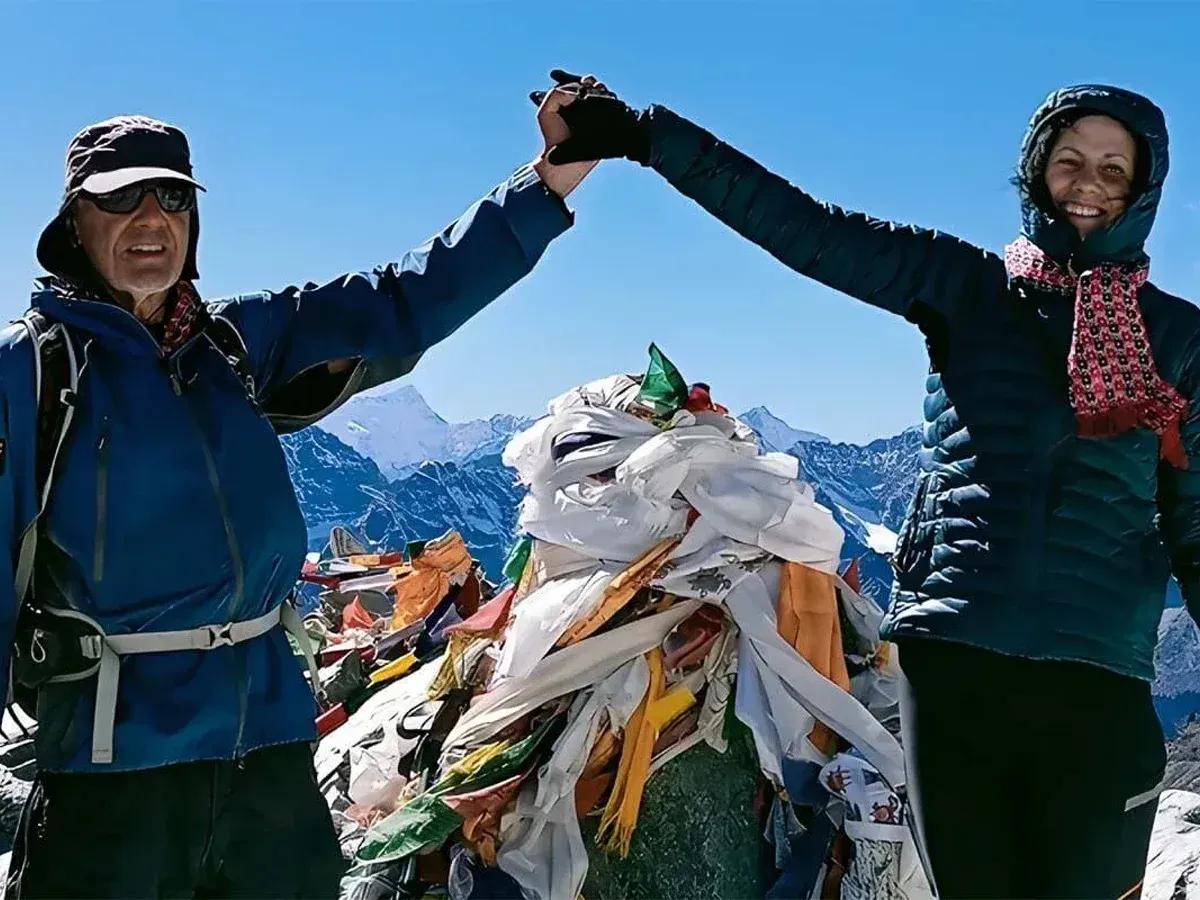
"We had excellent weather conditions for the two passes (Renjo La Pass and Cho La Pass) trek and Everest Base Camp. Our guide and porter were excellent. As we are aged 68 and 73 years old we needed some additional help from our guide to help us down some very steep and slippery sections of the trail. But all went well."

Georgetta Bidwell Voit (USA)

Georgetta Bidwell Voit (USA)

Verified

"The Everest trip was truly well organized and absolutely beautiful, with stunning mountains and valleys at every turn. The arrangements were excellent, and the company took great care of all our needs throughout the journey. Everything ran smoothly, allowing us to fully enjoy the breathtaking scenery and the adventure. A big thanks to the team for making this an unforgettable experience!"

Similar Treks You Might Like

USD $2535/ person
ℹ️ Limited seats available for selected departures
Book NowSend an InquiryCustomize Your Adventure
USD $2535 / pp
Book Now